

How to Buy Coffee Beans Cheaply Without Losing Freshness
Last Updated: November 7, 2026
Quick Summary
The cheapest way to buy coffee beans is to choose the bag with the lowest cost per good cup, not the lowest sticker price. Compare price per pound, cost per brewed cup, and days from roast date to empty bag, then buy the biggest bag you can finish while it still tastes fresh.
- Match bag size to your weekly drinking: 12-ounce bags suit 1 to 2 cups a day.
- A 2-pound bag is the sweet spot for 3 to 4 cups a day.
- Divide a large bag into smaller portions so less coffee meets air.
- Check the roast date, not the best by date, on every bag.
- Compare the delivered total including shipping, not the list price.
Table of Contents
- Why the Cheapest Bag Is Rarely the Cheapest Coffee
- How to Buy Coffee Beans in Bulk Without Wasting Money
- The Cheapest Place to Buy Coffee Beans Online
- Cost per Cup of Coffee: The Only Comparison That Matters
- Whole Bean vs. Pre-Ground Coffee Cost
- Supermarkets, Warehouse Clubs, and Local Roasters Compared
- A Repeatable Price-Checking Method You Can Run Monthly
- Find Your Perfect Roast at a Price That Works
- Frequently Asked Questions
Why the Cheapest Bag Is Rarely the Cheapest Coffee
The cheapest way to buy coffee beans is almost never the lowest sticker price on the shelf. It is the bag that delivers the lowest cost per good cup, and that means weighing price against freshness, bag size, and how fast you actually drink coffee. theITDGroup LLC roasts to order, and freshness makes a real difference in every cup.
Here is the trap. A big discount bag looks like a win at checkout. Then it sits in your cupboard for two months and turns flat. You end up brewing weak cups and using more grounds to compensate. The "cheap" bag costs more per cup than a smaller, fresher one.
The Three Numbers That Decide Your Real Cost
Ignore the shelf price for a moment. Three figures tell you what you are really paying:
- Price per pound (or per ounce): the only fair way to compare bag sizes
- Cost per brewed cup: total bag cost divided by the cups it actually makes
- Days from roast date to empty bag: how much freshness you lose before the last scoop
Get those three right and the cheapest option usually becomes obvious. Most shoppers only check the first one.
How to Buy Coffee Beans in Bulk Without Wasting Money
To buy coffee beans in bulk without waste, match the bag size to how much coffee you drink each week, then protect the beans so the last scoop tastes as good as the first. Bulk buying saves money only when the beans stay fresh until the bag is empty. If you brew two cups a day, a huge bag can go stale before you finish it, and the savings evaporate.
Start with a simple habit check. Count your daily cups for one week. Then work backward from a realistic shelf life. Freshness fades over time after roasting, and whole beans generally keep better than pre-ground coffee. Pay attention to the roast date and buy in amounts you can use while the beans still taste fresh.
- 1 to 2 cups a day: a 12-ounce bag finished within two to three weeks suits you best
- 3 to 4 cups a day: a 2-pound bag is the sweet spot and usually lowers your price per pound
- 5 or more cups a day, or a busy household: 5-pound bulk bags and larger orders pay off because you finish them inside the freshness window
The goal is simple. Buy the biggest bag you can finish while it still tastes fresh. A 5-pound bag is only a bargain if your household drinks it before it fades.
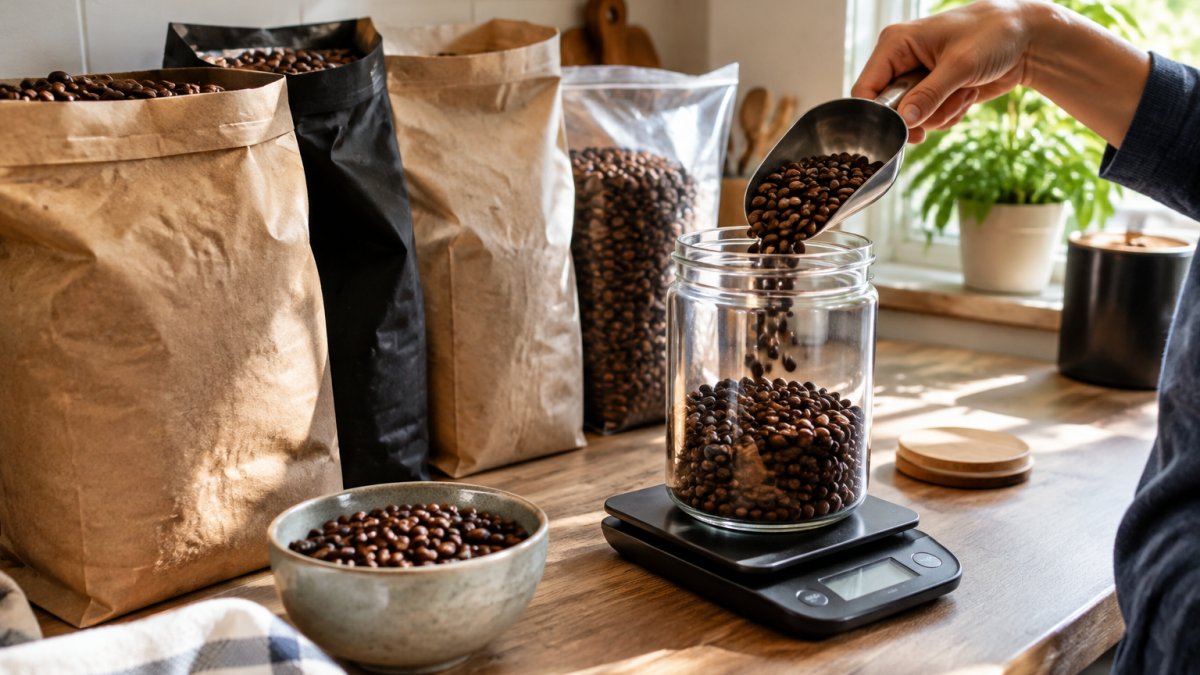
Bag Sizes, Shelf Life, and the Storage Trade-Off
Freshness fades faster than most people expect. That short window is the real cost of buying in bulk, and it is where most bulk buyers lose their savings. The fix is portioning, not willpower.
Dividing a large bag into smaller portions can help keep the coffee tasting fresh longer, since less of it is exposed to air each time you open the bag.
Store the coffee you are using in a sealed container away from light and heat.
Watch out: freezing beans in one large bag and reopening it repeatedly exposes the whole batch to moisture each time, which defeats the purpose. Portion first, then freeze.
A common pattern is that heavy drinkers save the most from bulk bags, while occasional drinkers save more by buying smaller and more often. If you brew one cup a day, a 5-pound bag is likely a false economy even at a low price per pound.
For a full walkthrough of containers and timing, see our guide on how to keep coffee fresh longer.
The Cheapest Place to Buy Coffee Beans Online
Buying coffee directly from a roaster that roasts to order can be a practical option. Compare the delivered total, including shipping, against other sources.
When comparing online sources, check the delivered total, including shipping, rather than the list price. For current prices and delivery options, visit theITDGroup LLC's website.
For a practical buying walkthrough, our guide on buying fresh roasted coffee beans online covers what to check before you order.
Cost per Cup of Coffee: The Only Comparison That Matters
Cost per cup is the single best way to compare coffee beans, because it accounts for bag size, dose, and waste. A bag that looks pricier per pound can still win if it brews more good cups. A cheap bag that forces you to use extra grounds often loses. Most shoppers stop at price per pound, which is why the lowest sticker price so often turns out to be the most expensive coffee in the cupboard.
Your cost per cup depends on the bag price, the bag weight, and how much coffee you use per cup. Divide the bag price by the number of cups you can brew from it to compare options.
Here is a simple way to compare options:
- Note the bag price and the bag weight
- Estimate how many cups the bag makes at your usual dose
- Divide the bag price by that cup count
- Compare that number across options, not the shelf price
A bag that looks cheaper per pound can still cost more per good cup if it tastes stale and needs extra grounds to brew well.
Your dose changes with the brew method, so compare cost per brewed cup using the dose you actually use. Fresher beans generally brew well at a normal dose, which helps keep your cost per cup steady.
If you want to see whether home brewing beats the café, our breakdown of coffee beans vs café coffee runs the numbers side by side.
Whole Bean vs. Pre-Ground Coffee Cost
Whole bean and pre-ground coffee can differ in price, but whole beans tend to stay fresh longer after grinding, which helps keep cost per cup down.
Whole beans also let you grind to fit your brewer. A coarse grind suits a French press. A fine grind suits espresso. Pre-ground coffee locks you into one texture, which may not match your gear.
Grinding whole beans just before brewing is one way to keep flavor fresh.
Supermarkets, Warehouse Clubs, and Local Roasters Compared
Each source trades price against freshness in a different way. Supermarkets are convenient, warehouse clubs can offer lower unit prices on large bags, and local roasters and roast-to-order sellers focus on freshness.
| Source | Unit Price | Freshness | Best For |
|---|---|---|---|
| Supermarket | Mid to high | Often older stock | Quick top-ups |
| Warehouse club | Low per pound | Varies, large bags | Heavy drinkers, big households |
| Local roaster | Mid to high | Fresh, dated | Flavor-first buyers |
| Roast-to-order online | Competitive | Freshest, roast date | Best cost per good cup |
One insider tip: check the roast date, not the "best by" date. A store bag with no roast date is a gamble. For a deeper look at how store-bought beans stack up, read fresh roasted vs store bought coffee.
A Repeatable Price-Checking Method You Can Run Monthly
Prices and shipping terms change over time, so it can help to re-check your options periodically.
- Note your current cost per cup from your last bag
- Check the delivered total on your top two or three sources
- Confirm the roast date or freshness policy
- Compare price per pound, not just bag price
- Factor in shipping and any minimum order
- Reorder the winner before you run out
Subscriptions can help here. A recurring order often comes with a subscription discount and steady delivery, which suits busy schedules. To decide whether one fits your budget, see our review on whether online coffee subscriptions are worth it.
Find Your Perfect Roast at a Price That Works
Comparing your options carefully, including cost per cup and freshness, can help you choose coffee that suits your budget.
theITDGroup LLC roasts to order and sources its beans carefully. Ordering is simple, and delivery brings your roast directly to your door.
For current prices and a quote, visit theITDGroup LLC's website and find your perfect roast.
Frequently Asked Questions
Is it cheaper to buy coffee beans in bulk?
Usually yes, but only up to the point you can drink before the beans go stale. Larger bags often cost less per pound than smaller ones. The catch is shelf life: whole beans hold peak flavor for roughly two to four weeks after the roast date, so a household brewing one or two cups a day should size bulk purchases to that window rather than chasing the lowest unit price.
Where is the cheapest place to buy coffee beans?
It depends on volume and shipping. Warehouse clubs and supermarket sales win on large bags of commodity blends, while online roasters often beat them once you factor in free shipping thresholds and subscription discounts on specialty beans. The reliable answer comes from comparing delivered cost, not sticker price: add shipping, divide by ounces, then divide by the number of cups the bag yields. Run that math on two or three sources before committing.
Is it cheaper to buy whole coffee beans or pre-ground?
Whole bean and pre-ground coffee from the same roaster usually cost the same per pound, so the price tag is not the deciding factor. Whole beans stay fresh longer because less surface area is exposed to oxygen, which means fewer bags spoiled before you finish them. If you currently pour out stale grounds, switching to whole beans and grinding at home lowers your effective cost per cup even at an identical purchase price.
How do I keep bulk coffee beans fresh after a big order?
Split the order as soon as it arrives. Keep a one-week supply in an airtight, opaque container at room temperature and freeze the rest in small, fully filled bags with the air pressed out. Grind only what you brew, and let frozen beans come to room temperature before grinding. Buy from roasters who print a roast date rather than a best-by date, and time your reorder so the next bag lands as the current one empties.
