

How to Keep Coffee Fresh Longer: A Storage Guide
Table of Contents
- Why Coffee Loses Freshness and How to Keep It Fresh Longer
- How to Store Coffee Beans for Maximum Freshness
- How to Store Ground Coffee Properly
- The Four Enemies of Coffee Freshness: Air, Light, Heat, and Moisture
- How Long Does Coffee Stay Fresh After Opening
- Can You Freeze Coffee Beans and Grounds
- Choosing the Right Storage Container
- Common Mistakes That Speed Up Coffee Staleness
- Frequently Asked Questions
Last Updated: October 10, 2026
Why Coffee Loses Freshness and How to Keep It Fresh Longer
Coffee begins losing flavor the moment it's roasted. Oxygen exposure, light, heat, and moisture all work against you. The good news: understanding these enemies helps you keep coffee fresh for weeks instead of days.
Even premium beans roasted to order need proper storage. The difference between stale and vibrant coffee often comes down to how you store it after opening.
Most coffee drinkers leave opened bags on the counter or use clear containers, both accelerate staleness. The solution is protecting beans from four specific threats: air, light, heat, and moisture.
How to Store Coffee Beans for Maximum Freshness
Whole beans stay fresh longer than ground coffee due to less surface area exposure. Store in an airtight container in a cool, dark place and seal immediately after scooping.
Store in your pantry or cabinet away from the stove at 60-70°F. Avoid the refrigerator unless freezing for long-term storage.
Use these steps to store whole beans properly:
- Buy only what you'll use within 2-4 weeks
- Keep beans in their original one-way valve bag if unopened
- Transfer to an airtight container once opened
- Label the container with the roast date
- Store away from heat sources and direct sunlight
How to Store Ground Coffee Properly
Ground coffee loses freshness faster than whole beans because it has roughly 10 times more surface area, allowing faster oxidation. Grind only what you'll brew within a few hours. Pre-ground coffee should be consumed within one week of opening. This is why coffee enthusiasts grind immediately before brewing.
The Four Enemies of Coffee Freshness: Air, Light, Heat, and Moisture
Understanding how each threat degrades flavor helps you choose the right storage strategy.
Protecting Coffee from Oxygen and Air Exposure
Oxygen causes oxidation, breaking down flavor and aroma compounds. One-way valve bags offer minimal protection once opened. Use airtight containers with tight-sealing lids instead, removing as much air as possible or using vacuum-seal bags.
Shielding Coffee from Light
UV rays break down flavor compounds. Use opaque containers, brown glass, ceramic, or stainless steel, rather than clear ones. Avoid direct sunlight; store in your pantry or cabinet instead of on countertops.
Maintaining the Right Temperature
Heat accelerates degradation. Keep coffee at 60-70°F, away from stoves, ovens, and windows. Stable temperatures prevent moisture formation inside containers.
Controlling Humidity and Moisture
Excess moisture triggers mold, clumping, and flavor loss. Keep containers away from sinks, dishwashers, and bathrooms. Your pantry typically has ideal humidity. Silica gel packets can absorb excess moisture; replace monthly.
How Long Does Coffee Stay Fresh After Opening
Coffee freshness depends on three variables: whether it's whole beans or ground, how much you bought, and how quickly you'll use it. Rather than a one-size-fits-all timeline, use this decision framework to choose the right storage method for your situation.
Freshness Timelines by Coffee Type
Whole beans (unopened): 2-4 weeks from roast date in cool, dark storage. Whole beans (opened, airtight): 2-4 weeks at room temperature; 3-6 months frozen. Ground coffee (unopened): 1-2 weeks from roast date. Ground coffee (opened, airtight): 3-7 days at room temperature; 2 months frozen. Pre-ground (can/bag): 1-2 weeks after opening.
Storage Decision Matrix
Use this framework to match your situation to the best storage method:
| Your Situation | Recommended Storage | Expected Freshness | Why |
|---|---|---|---|
| Buy 12 oz whole beans, brew daily | Airtight pantry container | 2-4 weeks | Room-temperature storage is sufficient for regular consumption |
| Buy 2+ lbs whole beans at once | Freeze in 12 oz portions, pantry for current portion | 3-6 months total | Freezing preserves bulk purchases; pantry storage for active use |
| Grind at home, brew daily | Grind immediately before brewing | Peak flavor each brew | No storage needed; eliminates staleness entirely |
| Buy pre-ground coffee | Airtight pantry container | 1 week | Pre-ground deteriorates fastest; use quickly |
| Receive whole beans as a gift, brew occasionally | Freeze in small portions | 3-6 months | Freezing extends shelf life for infrequent use |
| Buy whole beans, travel frequently | Freeze in single-use portions | 3-6 months | Portioning prevents waste; freezing handles irregular consumption |
How to Identify Stale Coffee
Freshness loss is gradual, but these signs indicate coffee has passed its peak:
Aroma test (most reliable): Fresh coffee has rich, complex aroma; stale coffee smells flat or musty. Visual inspection: Fresh beans appear shiny and oily; stale beans look dull. Clumpy ground coffee indicates moisture absorption. Flavor when brewed: Stale coffee tastes flat and thin; fresh coffee is bright and complex. Crema (espresso): Fresh coffee produces thick crema lasting 30+ seconds; stale coffee produces thin, short-lived crema.
The Roast Date vs. Purchase Date
The roast date matters more than purchase date. A bag roasted 1 week ago tastes noticeably better than one roasted 4 weeks ago. Prioritize bags with roast dates within 1-2 weeks; avoid those older than 4 weeks unless freezing immediately.
Storage Duration at a Glance
- Peak flavor window: 1-2 weeks from roast date
- Good flavor: 2-4 weeks from roast date (whole beans, proper storage)
- Acceptable but declining: 4-6 weeks from roast date
- Noticeably stale: Beyond 6 weeks at room temperature
- Extended freshness: 3-6 months if frozen in portions
Stale coffee is safe to drink but won't deliver the flavor experience you paid for. Most people notice a significant quality drop after 4 weeks of room-temperature storage, making this the practical limit for pantry storage.
Can You Freeze Coffee Beans and Grounds
Freezing is the most effective long-term storage method for coffee beyond one month. The cold dramatically slows oxidation and other chemical processes that degrade flavor. Properly frozen coffee can remain fresh for 3-6 months, compared to 2-4 weeks at room temperature.
The critical challenge with freezing is moisture. Temperature swings cause condensation to form on beans or grounds when you move them between freezer and room temperature. This condensation introduces the very moisture that accelerates staleness. Preventing condensation requires understanding the thaw process and using proper portioning.
Freezing Whole Beans: Portion-Based Strategy
Freeze whole beans in small, single-use portions rather than one large container. This eliminates repeated freeze-thaw cycles, which degrade quality each time they occur.
Portioning approach:
- Divide beans into amounts you'll use within 5-7 days of thawing
- Use small airtight freezer bags (quart-size or smaller) or vacuum-sealed portions
- Remove as much air as possible before sealing, use a straw to extract air from freezer bags if you lack a vacuum sealer
- Label each portion with the roast date and freeze date using a permanent marker
- Store portions in a dedicated freezer section away from strong-smelling foods (coffee absorbs odors)
Thawing whole beans correctly:
- Remove one sealed portion from the freezer
- Leave it sealed at room temperature for 30 minutes
- Do not open the container until it reaches room temperature
- Once thawed, use the beans within 5-7 days; do not refreeze
The sealed thawing step is essential. Opening a cold container exposes the beans to warm air, causing moisture to condense on their surface. Keeping the container sealed allows the interior temperature to equalize gradually without moisture forming.
Freezing Ground Coffee: Superior Results for Short-Term Freezing
Ground coffee actually freezes more effectively than whole beans because smaller particles freeze more uniformly and thaw more quickly. If you grind at home, freezing ground coffee in single-use portions is often the most practical approach.
Portioning ground coffee:
- Grind your beans fresh, then immediately portion into small freezer bags or airtight containers
- Use one portion per brewing session (typically 0.5-1 ounce, depending on your brew method)
- Seal portions with minimal air space
- Frozen ground coffee stays fresh-tasting for up to 2 months; whole beans frozen for the same duration show more noticeable flavor loss
Thawing ground coffee:
- Follow the same sealed-thawing method as whole beans: 20-25 minutes sealed at room temperature
- Brew immediately after thawing; do not store thawed grounds
When Freezing Makes Sense
Freeze coffee if:
- You buy in bulk or receive shipments larger than your 2-4 week consumption rate
- You want to preserve beans roasted more than 2 weeks ago
- You have a favorite coffee you want to keep on hand for occasional use
Do not freeze if:
- You brew coffee daily and can store beans in a cool pantry
- You lack freezer space or cannot commit to proper portioning
- Your freezer experiences frequent temperature fluctuations (a sign of a seal issue)
The Condensation Risk: Why It Matters
Condensation is the primary reason frozen coffee sometimes tastes stale or flat. When beans or grounds thaw too quickly or are exposed to warm air while cold, water droplets form on the surface. This moisture triggers faster oxidation and can promote mold growth if not used promptly. Sealed thawing prevents this by allowing temperature to equalize without exposing the coffee to humid air.
Choosing the Right Storage Container
The best storage container has three features: airtight seal, opaque material, and proper size. Don't buy containers that are too large. Excess air space accelerates staleness.
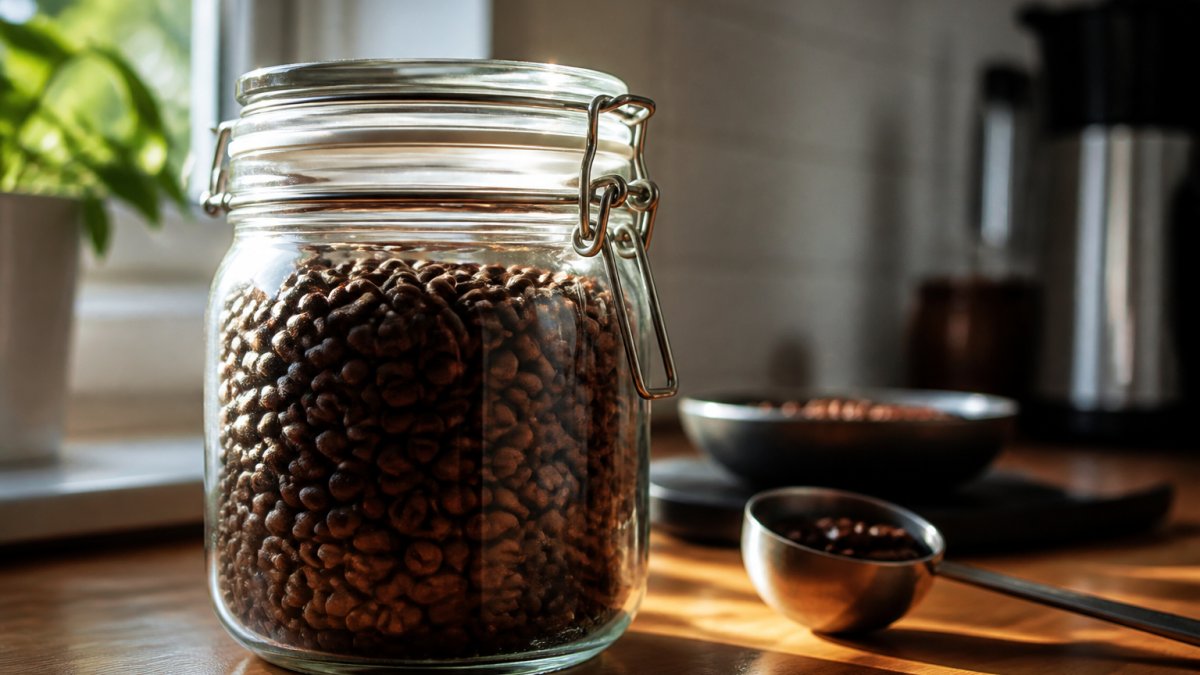
Glass containers with rubber gasket seals work well. Ceramic canisters with tight lids are also excellent. Stainless steel provides superior light protection.
Avoid clear plastic containers. They allow light penetration and don't seal as tightly as glass or ceramic. Paper bags and open containers are the worst options.
Size matters too. A 32-ounce container for 12 ounces of beans leaves too much air space. Choose containers that fit your typical supply with minimal extra room.
| Container Type | Seal Quality | Light Protection | Best Use |
|---|---|---|---|
| Glass with rubber gasket | Excellent | Good | Short-term storage |
| Ceramic with tight lid | Excellent | Excellent | Short-term storage |
| Stainless steel | Excellent | Excellent | Any storage duration |
| Clear plastic | Fair | Poor | Not recommended |
| Paper bag | Poor | Fair | Temporary only |
Common Mistakes That Speed Up Coffee Staleness
The biggest mistake is leaving opened bags unsealed on the counter. This exposes beans to all four enemies simultaneously. Even one day of open-air storage noticeably degrades flavor.
Buying too much coffee at once is another common error. Even perfect storage can't prevent staleness after 4-6 weeks. Buy only what you'll use within a month.
Storing coffee in the refrigerator is tempting but counterproductive. Moisture and temperature fluctuations cause condensation. Your pantry is always better than the fridge for short-term storage.
Using clear containers defeats the purpose of proper storage. Sunlight streaming through glass or plastic constantly damages your beans. Opaque containers cost the same and work much better.
Grinding all your beans at once is wasteful. Ground coffee deteriorates rapidly. Grind immediately before brewing whenever possible.
Keeping coffee fresh requires protecting it from air, light, heat, and moisture. The right storage method preserves the flavor and aroma that make premium coffee worth buying. At theITDGroup LLC, we roast beans to order and ship them fresh to your door, but proper storage ensures they stay at peak quality. Use airtight opaque containers, store in a cool dark place, and grind just before brewing.
Frequently Asked Questions
What is the best way to keep coffee fresh longer?
Store coffee in an airtight container in a cool, dark place away from direct sunlight and heat. Use whole beans when possible, grind just before brewing, and keep your container sealed tightly to minimize air exposure. For whole beans, pantry storage works best; for opened bags, transfer to an airtight container to maintain freshness and prevent flavor loss.
How long does coffee stay fresh after opening the bag?
Whole beans stay fresh for 2-4 weeks after opening when stored in an airtight container in a cool location. Ground coffee loses freshness faster, typically within 1-2 weeks. Roast date matters more than purchase date, coffee roasted to order, like theITDGroup LLC's fresh roasts, begins with peak flavor and aroma from day one, so proper storage becomes even more critical to preserve that quality.
Can you freeze coffee beans to extend freshness?
Yes, freezing works well for long-term storage. Place whole beans in an airtight, freezer-safe container or vacuum-sealed bag to prevent moisture and odor absorption. Freeze in small portions so you only thaw what you need, avoid repeated thawing and refreezing, which damages flavor. Frozen beans stay fresh for several months. Let them reach room temperature before opening the container to prevent condensation.
Does ground coffee go stale faster than whole beans?
Yes, ground coffee loses flavor and aroma much faster than whole beans because grinding increases surface area exposed to oxygen. Ground coffee stays fresh 1-2 weeks in airtight storage, while whole beans last 2-4 weeks. For maximum freshness, grind your beans immediately before brewing rather than storing pre-ground coffee, especially if you're investing in premium, freshly roasted beans.