

Fresh Roasted vs Store Bought Coffee: What Actually Matters
Table of Contents
- Fresh Roasted Coffee vs Store Bought: The Core Difference
- Why the Coffee Roast Date Importance Cannot Be Ignored
- What Is Coffee Degassing and Why It Affects Flavor
- Signs of Stale Coffee Beans and Flavor Profile Degradation
- How to Store Coffee Beans for Freshness at Home
- Traceability, Single-Origin Sourcing, and Specialty Coffee Standards
- Fresh Roasted Coffee vs Store Bought: Cost, Convenience, and Quality Trade-offs
- Which Option Delivers Better Results: Fresh Roasted or Store Bought
- Frequently Asked Questions
Last Updated: October 2, 2026
Fresh Roasted Coffee vs Store Bought: The Core Difference
The difference between fresh roasted coffee and store-bought coffee comes down to one critical factor: time. When beans are roasted, they enter a chemical transformation that peaks within days and deteriorates from there. Fresh roasted coffee captures that window when aromatic compounds are at their strongest and volatile oils haven't oxidized away. Store-bought coffee, by contrast, sits in warehouses and on shelves, sometimes for months, losing flavor and complexity with each passing week.
Freshness isn't marketing language, it's the difference between vibrant and flat coffee. Understanding what happens after roasting separates excellent cups from mediocre ones.
Most people don't realize how stale their coffee is. A bag sitting in a grocery store for six months undergoes chemical changes no brewing technique can reverse. The choice is about whether you want to taste what coffee is actually supposed to taste like.
Why the Coffee Roast Date Importance Cannot Be Ignored
The roast date is the most important information on a coffee bag.
Beans roasted three days ago taste noticeably different from beans roasted three weeks ago. Aromatic compounds dissipate, volatile oils oxidize, and sweetness flattens.
Store-bought coffee rarely displays a roast date and is often months old by purchase. Wholesale coffee must survive shipping, warehouse storage, and retail shelf time.
Fresh roasted coffee arrives with a clear roast date so you can brew at peak freshness. [Our House Blend and single-origin options](/products/house-blend) like Brazil Santos provide this transparency, so you're never guessing whether your coffee is past its prime.


What Is Coffee Degassing and Why It Affects Flavor
Coffee degassing is the process by which beans release carbon dioxide after roasting. Over 24-48 hours, they release most of that gas, essential to how fresh coffee tastes.
Carbon Dioxide Release and the Freshness Window
Brewing too soon after roasting, excessive CO2 interferes with water extraction, resulting in under-extracted, sour coffee. Wait too long, and volatile oils that give brightness and complexity are gone.
The ideal freshness window is 3-10 days after roasting, when degassing allows clean extraction but aromatic compounds remain intact.
Store-bought coffee has already completed degassing and lost the aromatic compounds that made it worth drinking. The chemical window has closed.
Aromatic Compounds and Volatile Oils
Fresh roasted coffee contains volatile oils and aromatic compounds that give it character. These fragile compounds oxidize with oxygen exposure, degrade with light and heat, and dissipate over time. Fresh roasted coffee smells more vibrant because those compounds are still present in meaningful quantities.
Single-origin coffees like our Colombia and Guatemala showcase this difference most clearly. Freshly roasted beans display distinct flavor notes, dried orange, berry, chocolate, bright fruit, butterscotch, because aromatic compounds are intact. Months old, the same bean tastes muted and generic.

Aromatic compounds are volatile by definition, they evaporate. The longer coffee sits, the fewer remain. Fresh roasted coffee commands attention while store-bought fades into the background.
Signs of Stale Coffee Beans and Flavor Profile Degradation
Stale coffee doesn't announce itself loudly. It simply tastes less like itself.
The most obvious sign is flavor flatness. Fresh coffee has bright notes, subtle sweetness, and clean finish.
Fresh coffee has body and weight on your tongue.
Fresh coffee has clean, pleasant acidity that brightens the cup. Stale coffee develops sharp, sour taste because acids oxidize into harsher compounds.
Aroma is the easiest indicator. Smell the beans before brewing.
How to Store Coffee Beans for Freshness at Home
Fresh roasted beans are more sensitive to their environment because they still contain volatile compounds. Proper storage protects those compounds.
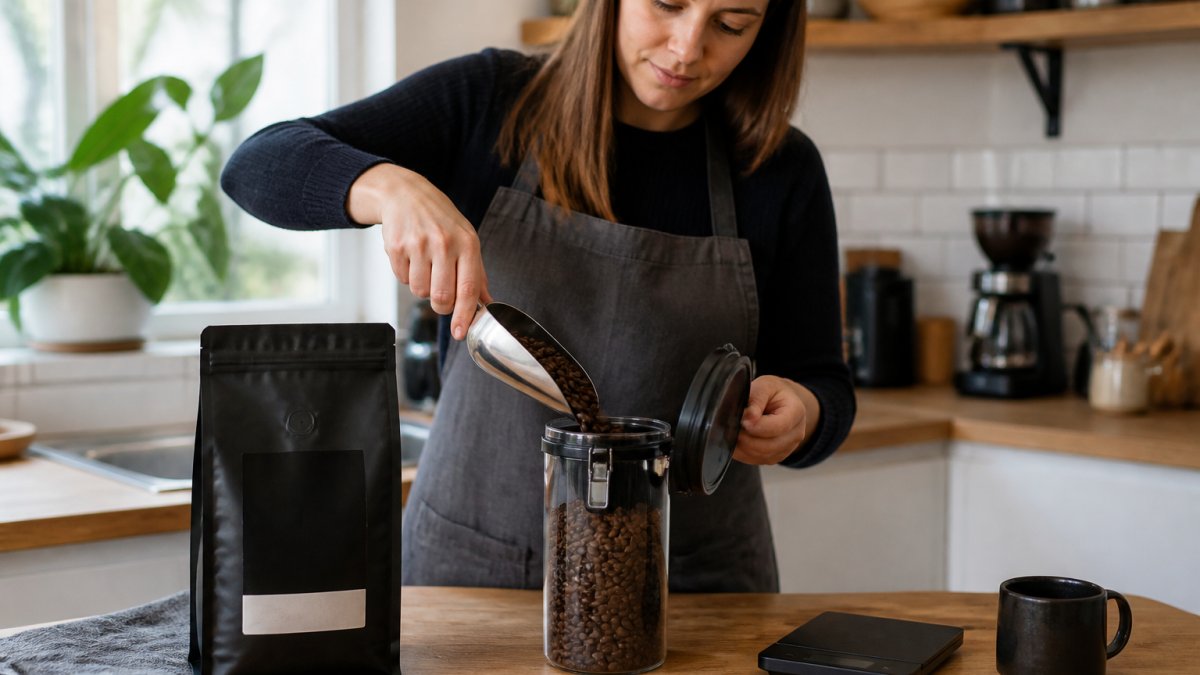
Packaging Valve and Airtight Container Essentials
The one-way valve on fresh roasted coffee bags lets CO2 escape while preventing oxygen from entering.
Once opened, use an airtight, opaque container to minimize oxygen exposure and block light. Glass jars with rubber seals or ceramic containers with tight lids work well.
Use an airtight container designed to stay sealed between uses. Store only the amount you'll use in a week; keep the rest sealed in its original bag.
Temperature, Light, and Oxidation Control
Temperature stability matters more than absolute temperature. A cool pantry at 65-70°F is ideal. Avoid the refrigerator, temperature fluctuations introduce condensation that damages beans.
Light accelerates oxidation of aromatic compounds and volatile oils. Store beans in a dark cabinet, not on the counter in a clear glass jar.
Proper storage slows oxidation dramatically, extending the freshness window from days to weeks.
Traceability, Single-Origin Sourcing, and Specialty Coffee Standards
Fresh roasted coffee provides complete transparency about bean origin. Traceability ensures the coffee in your cup is actually what the roaster claims.
Single-origin coffee means beans from a specific farm, region, or country, telling you what to expect.
Our Colombia comes from smallholder farmers in Medellin at 1,300-1,500 meters, fully washed and solar dried. The Guatemala comes from Antigua at 1,200-1,616 meters, fully washed and sun dried. You know exactly where these beans came from and how they were processed.
Specialty coffee standards require knowing origin, altitude, processing method, and varietal.
Fresh roasted coffee with clear traceability is selected and roasted with intention for flavor potential.
Fresh Roasted Coffee vs Store Bought: Cost, Convenience, and Quality Trade-offs
Fresh roasted coffee costs more, requires planning for delivery, and demands attention to storage. Store-bought is cheaper and always available. The question is whether quality justifies the trade-offs.
Price Comparison and Value
Fresh roasted coffee from theITDGroup LLC costs $23.99 per bag. You get beans roasted within days, not months.
Store-bought coffee costs anywhere from $8 to $15 per bag for decent quality, less for budget brands.
The real value question is per cup. A bag of fresh roasted coffee yields roughly 15-17 cups depending on brewing method. At $23.99, that's about $1.40-$1.60 per cup.
Delivery Reliability and Consistency
Fresh roasted coffee requires planning because it ships directly from the roaster. You can't walk into a store and grab a bag. However, theITDGroup LLC's delivery is reliable, you order online through a simple process and beans arrive within days of roasting.
Store-bought coffee is always available, which matters if your schedule is chaotic or you travel frequently. You can grab a bag whenever you remember you're out.
The consistency question favors fresh roasted. Every bag of our House Blend tastes the same because it's roasted to the same standard from the same sourced beans.
Store-bought coffee is best for people prioritizing convenience and cost above all else.
Which Option Delivers Better Results: Fresh Roasted or Store Bought
Fresh roasted coffee delivers better results if your goal is to taste what coffee actually tastes like. The flavor difference is measurable and immediate.
Store-bought coffee delivers better results if your goal is convenience and cost. You spend less money and effort. You get caffeine reliably.
The honest answer is that fresh roasted coffee is objectively superior in terms of flavor, aroma, and complexity.
| Aspect | Fresh Roasted | Store Bought |
|---|---|---|
| Flavor Complexity | Bright, multi-dimensional | Flat, one-dimensional |
| Aromatic Compounds | Intact and vibrant | Oxidized and faded |
| Roast Date Transparency | Always provided | Rarely provided |
| Cost per Bag | $23.99 | $8-$15 |
| Shelf Life After Purchase | 3-4 weeks peak | Already stale |
| Traceability | Complete origin information | Often unknown |
| Delivery Method | Direct from roaster | Retail supply chain |
| Convenience | Requires planning | Always available |
Frequently Asked Questions
Does the roast date on a coffee bag really matter?
Yes. The roast date determines your freshness window. Fresh roasted coffee reaches peak flavor 5-7 days after roasting, when degassing is complete and aromatic compounds are stable. Store-bought coffee often sits 2-4 weeks before purchase, meaning you're starting from a point of already-lost flavor. Single-origin beans show this difference most clearly, a Colombia roasted last week tastes noticeably brighter and more complex than the same origin roasted six weeks ago.
What is coffee degassing and why does it matter for freshness?
Degassing is the release of carbon dioxide that builds up inside beans during roasting. Fresh roasted coffee continues degassing for 24-48 hours after roasting, which affects extraction and flavor. Too early (before degassing completes), brewing produces sour, uneven extraction. Too late (after 3-4 weeks), volatile oils oxidize and aromatic compounds fade, leaving flat, stale flavors. This is why fresh roasted coffee roasted to order performs best, the timing aligns with your brewing.
How can I tell if coffee beans are stale?
Stale coffee beans show several signs: the surface looks dull or chalky instead of shiny, they lack the rich aroma when you open the bag, and they produce minimal coffee bloom during brewing. Flavor-wise, stale beans taste flat, bitter, or hollow, missing the acidity, body, and distinct notes that fresh beans display.
What's the best way to store coffee beans to keep them fresh?
Store beans in an airtight container with a one-way valve (which lets carbon dioxide escape without letting oxygen in) in a cool, dark place away from direct sunlight and heat. Avoid the refrigerator or freezer, temperature fluctuations cause condensation that accelerates staling. Buy only what you'll use in 2-3 weeks. Fresh roasted coffee with a recent roast date stays flavorful longer because you're starting with maximum aromatic compounds and volatile oils intact, giving you a wider freshness window than store-bought options.
Is fresh roasted coffee worth the extra cost compared to store-bought?
For specialty coffee drinkers, yes. Fresh roasted coffee at $23.99 per pound delivers noticeably more flavor complexity, aroma, and sensory experience. You taste the difference in your cup immediately, brighter acidity, cleaner body, and distinct tasting notes. If you brew daily, fresh roasted coffee justifies the cost because each cup tastes significantly better. Casual drinkers may find store-bought adequate, but anyone who cares about flavor profile will notice the gap.
The choice between fresh roasted and store-bought coffee comes down to what you value. If you want coffee that tastes genuinely excellent, coffee with character, complexity, and the flavors the roaster actually intended, fresh roasted is the answer. theITDGroup LLC offers carefully sourced beans roasted to order, delivered fresh to your door with complete transparency about origin and processing. Find Your Perfect Roast and experience the difference that freshness actually makes.