

Are Online Coffee Subscriptions Worth It? 2026 Review
Table of Contents
- How We Evaluated Coffee Subscriptions
- Coffee Subscription Cost vs. Buying Local
- Coffee Subscription Pros and Cons for Home Brewers
- Coffee Subscription Frequency: How Often Should Beans Arrive?
- Coffee Subscription for Espresso: What to Look For
- Cancellation, Pause, and Renewal Terms That Matter
- Who Gets the Most Value From Online Coffee Subscriptions
- Frequently Asked Questions
Last Updated: October 9, 2026
How We Evaluated Coffee Subscriptions
Are online coffee subscriptions worth it? For most households that brew daily, yes, provided the roaster ships within days of roasting rather than weeks.
Our evaluation method is simple. We score each plan on five criteria:
| Criteria | What We Check | Why It Matters |
|---|---|---|
| Freshness | Roast-to-order vs. warehouse stock | Flavor fades within weeks of roasting |
| Cost per cup | Total price divided by brewed cups | Reveals the real value |
| Flexibility | Pause, skip, cancel, swap | Prevents wasted bags |
| Grind options | Whole bean vs. ground | Whole beans stay fresh longer |
| Origin transparency | Farm, region, tasting notes | Tells you what you are buying |
Most guides rank subscriptions on branding alone. That approach misses the point.
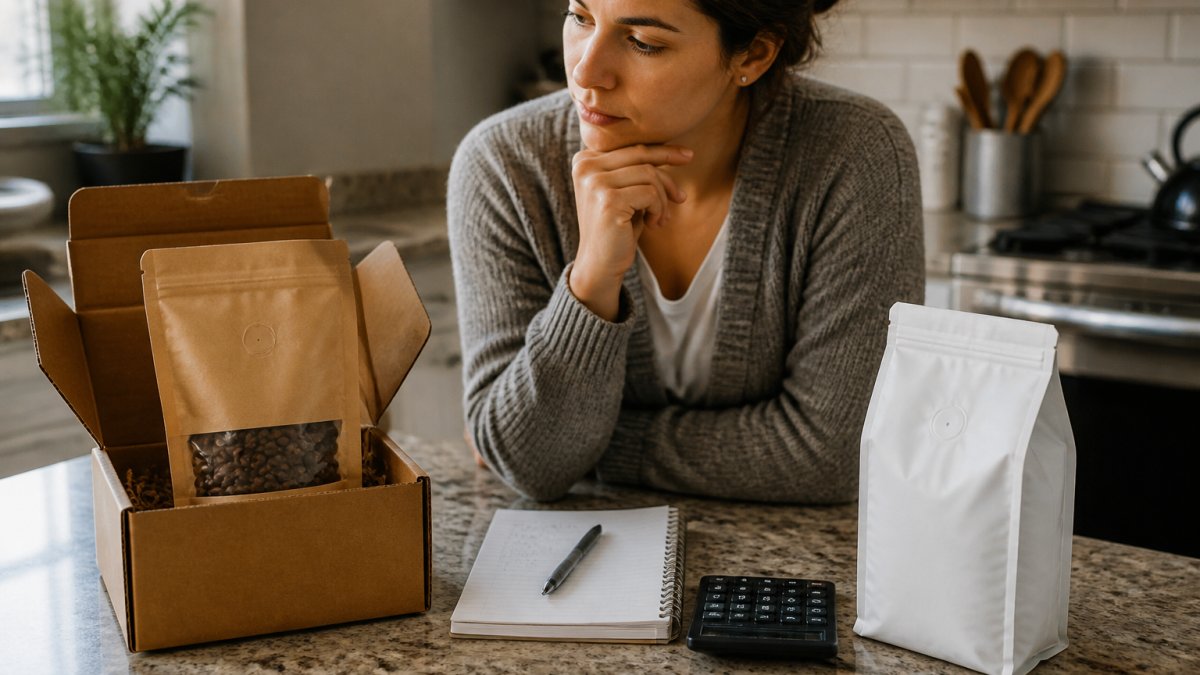
Coffee Subscription Cost vs. Buying Local
A coffee subscription costs more per bag than most grocery coffee but less than a daily cafe habit.
Start with yield. A 12-ounce bag of whole beans typically brews 16 to 20 cups on a drip brewer at a standard dose, and closer to 14 to 16 cups on espresso once you account for dialing in and puck waste.
Then add the costs that sticker prices hide:
- Shipping. Many roasters charge flat-rate shipping on orders under a threshold, and that fee can add meaningfully to the per-cup cost on a single small bag. Free-shipping thresholds usually reward buying two bags at once, which only helps if you can brew them before they stale.
- Prepaid discounts. Some services knock a percentage off when you prepay for several deliveries up front. The discount is real, but it locks in your money before you know whether you like the roast.
- Local pickup. A nearby roaster has no shipping line at all, and many sell day-old or "roasted this week" bags at a discount. That is often the cheapest fresh coffee available.
- Cafe baseline. A single drip coffee at a counter typically runs several times the per-cup cost of brewing at home, which is the number most subscription marketing quietly compares against.
Here is the framework we would use, in plain terms:
- Divide your total subscription cost for one delivery, bag price plus shipping, minus any prepaid discount, by the number of cups that bag actually brews for you.
- Do the same for your local roaster's bag, with no shipping line.
- Do the same for your grocery shelf bag, accepting that it is likely older than the roast date on the label suggests.
- Compare all three against what you would spend at a cafe for the same number of cups.
The subscription usually wins on freshness and convenience, not always on raw price. A local roaster with no shipping can beat a subscription on cost per cup while matching it on freshness.
Coffee Subscription Pros and Cons for Home Brewers
The pros of a coffee subscription center on freshness and convenience. The cons center on commitment and the risk of receiving coffee you did not choose.
Pros:
- Freshly roasted coffee shipped close to the roast date
- Automatic delivery that removes reordering from your week
- Access to single-origin coffees and blends you may not find locally
- Customization of grind size, roast level, and delivery frequency
- Sample packs that let you try before committing to a full bag
Cons:
- You pay shipping on smaller orders in many cases
- Some services lock you into longer renewal cycles
- You cannot smell or taste before the first shipment
- Bags can pile up if your brewing slows down
The biggest mistake we see is ordering a large bag of an unfamiliar roast. Start with a sample pack instead. Our Best Sellers Sample Pack ships six 2-ounce packs covering a dark house blend, a medium-dark Cowboy blend, a smooth Breakfast blend, and single origins from Peru and Mexico. At $24.99, it costs less than a mistake on a two-pound bag.

Coffee Subscription Frequency: How Often Should Beans Arrive?
Match delivery frequency to how fast you actually brew, not how fast you wish you brewed. Over-ordering is the most common reason people cancel subscriptions.
A useful rule: one 12-ounce bag lasts about two to three weeks for a one-cup-a-day drinker. Two-cup households burn through a bag in roughly ten days.
| Your Pace | Bags per Month | Recommended Frequency |
|---|---|---|
| 1 cup/day | 1 to 2 | Every 3 to 4 weeks |
| 2 cups/day | 2 to 3 | Every 2 weeks |
| 3+ cups/day | 4 | Weekly or biweekly |
| Weekend only | 1 | Monthly |
Freshness should drive the decision. Coffee tastes best within two to four weeks of the roast date, so ordering more than you can brew in that window wastes money. If you are unsure, start slower and increase frequency later. Most services let you change the schedule after the first delivery.
Coffee Subscription for Espresso: What to Look For
A coffee subscription for espresso needs different specs than one built for drip. Espresso rewards freshness, consistent roast level, and beans that hold up under pressure.
Look for these markers:
- Roast level: Medium to dark roasts pull more reliably, with the cocoa and caramel notes that cut through milk. Our Cowboy Blend combines dark and medium roasts for exactly this reason.
- Rest time: Espresso performs best a few days after roasting, once the beans have degassed. Very fresh beans can taste sharp.
- Grind: Always order whole bean if you have a grinder. Pre-ground coffee loses aroma quickly and clogs espresso baskets unevenly.
- Origin consistency: Blends built for espresso, like our 6Bean house blend, deliver repeatable shots. Single origins offer variety but require dialing in each bag.
If you want to test espresso roasts without buying full bags, the Single Origin Favorites Sample Pack includes medium and medium-dark options from Brazil, Colombia, Honduras, and Tanzania, each with published tasting notes.

Cancellation, Pause, and Renewal Terms That Matter
Flexibility is the single most underrated factor in whether a subscription is worth it.
Before you subscribe, confirm four things, and read the actual terms, not the marketing page:
Best Sellers Sample Pack: 6Bean, Cowboy, Breakfast, Peru, Mexico, Bali →
- Pause: Can you suspend deliveries during travel or a busy month, and for how long? Some services allow an indefinite pause; others cap it at a set number of weeks before the plan resumes automatically.
- Skip: Can you skip a single shipment without canceling entirely? This is the most useful control for anyone whose brewing pace varies week to week.
- Cancel: Is cancellation self-serve in your account, or does it require an email or phone call during business hours? Self-serve cancellation is the clearest signal that a service expects you to stay because you want to, not because you cannot leave.
- Renewal: Does the plan auto-renew, and how much notice is required to stop it? Prepaid plans are the biggest trap here, you pay up front for several deliveries, and the refund policy if you cancel mid-term is often limited or nonexistent.
A few mechanisms worth understanding before you commit:
Auto-renewal and negative-option billing. When a subscription renews automatically, the charge is a "negative option", you have to act to stop it, rather than act to start it. Federal Trade Commission guidance on negative-option marketing requires clear disclosure of the renewal terms, the amount, and how to cancel before you are charged. If a service buries those terms, that is a warning sign, not a technicality.
Prepaid commitments. A prepaid plan trades a discount for your money up front. That is fine if you already know you like the coffee. It is a poor first move if you are still testing.
Billing cadence versus delivery cadence. Some services bill on a fixed monthly cycle even when your delivery is set to every six weeks.
Missed or delayed shipments. Ask what happens if a delivery is late or lost.
If you travel often, prioritize services with easy skip and pause controls. If you are testing, favor one-time purchases over auto-renewing plans until you know you like the coffee. The flexibility terms matter more than the price difference for anyone whose schedule is not perfectly regular.
Federal Trade Commission guidance on subscription auto-renewal and negative option marketing
Who Gets the Most Value From Online Coffee Subscriptions
Online coffee subscriptions deliver the most value to daily brewers who care about freshness, want variety, and dislike reordering. They deliver the least value to occasional drinkers and anyone without a grinder.
The clearest winners:
- Daily home brewers who drink two or more cups and want roast-to-order coffee without errands
- Espresso enthusiasts who need consistent, fresh beans and a reliable roast level
- Explorers who want single-origin variety and curated selections they cannot find locally
- Busy professionals who value automatic delivery over shopping
The weaker fits:
- Occasional drinkers who brew a few cups a week
- Anyone unwilling to grind whole beans
- Households already happy with a nearby roaster
If you fall into the first group, start with a sample pack to find your roast, then move to a recurring plan. Our Flavored Coffees Sample Pack lets you test French Vanilla, Hazelnut, Cinnabun, Caramel, and Mocha before committing, and our 60 Pack Single Serve Coffee Capsules suit anyone who wants freshness without a grinder.

The real challenge is not finding a subscription.
U.S. Food and Drug Administration guidance on food safety and labeling
U.S. Department of Agriculture information on coffee and agricultural sourcing
Federal Trade Commission guidance on subscription auto-renewal and negative option marketing
Frequently Asked Questions
Are online coffee subscriptions worth the cost?
It depends on how much you spend on coffee now. If you buy two to three bags per month at retail, a subscription often costs the same or less while delivering fresher beans. The Best Sellers Sample Pack at $24.99 lets you test six roasts before committing to a recurring plan. Factor in shipping, bag size, and how fast you go through a pound. Heavy drinkers who value roast-to-order freshness typically get the most value.
Are coffee subscriptions fresher than grocery-store coffee?
Usually yes. Grocery store bags can sit on shelves for weeks or months after roasting. Subscriptions that roast to order ship within days of the roast date, so beans arrive at peak flavor. Look for a roast date printed on the bag, not just a best-by date. Whole beans stay fresh longer than ground coffee, so grinding right before brewing makes the biggest difference in your cup.
Can you pause or cancel a coffee subscription at any time?
Most services let you pause, skip a delivery, or cancel online without a phone call. Check the terms before you sign up: some require cancellation 48 to 72 hours before your next shipment, and prepaid plans may not refund mid-cycle. If you travel often, look for a service with a flexible delivery schedule and a simple pause option so you are not paying for bags that sit on your porch.
Which coffee subscription is best for espresso?
Espresso works best with beans roasted for that brew method, typically medium to dark roasts with lower acidity. The 6Bean Blend in the Best Sellers Sample Pack is a dark roast designed for espresso, with a meticulous blend of coffees from around the world. Look for a roast level listed on the bag and a grind option sized for espresso if you do not grind at home. Freshness matters more for espresso than any other brew method.
How do you choose the right coffee subscription?
Start with three questions: how much coffee do you drink per week, what roast level do you prefer, and do you want whole beans or ground? Then check delivery frequency options, bag sizes, and whether you can skip or pause. Sample packs are the cheapest way to test a roaster before committing. Read the tasting notes and origin details so you know what flavor profile to expect before your first full bag arrives.