

Buying Coffee Beans vs Café Coffee: Which Is Cheaper?
Last Updated: November 5, 2026
Quick Summary
Yes, buying your own coffee beans and brewing at home is cheaper in almost every scenario. A café drip coffee typically costs $2 to $4, while a home-brewed cup made from coffee beans costing around $24 per pound works out to a little over 50 cents per cup before filters, water and energy.
- A one-pound bag of beans yields roughly 45 cups at a 10-gram dose per 6-ounce cup.
- Over-dosing by 3 grams per cup raises your per-cup cost by roughly a third.
- Single-serve pods often cost two to three times as much per cup as bagged coffee beans.
- Divide total equipment spend by monthly café savings to find your break-even point.
- A four-cup household can save around $300 a month compared with café coffee.
Table of Contents
- Coffee Beans vs Café Coffee: The Real Cost Breakdown
- The Cost per Cup of Coffee Beans, Calculated Step by Step
- Whole Bean Coffee vs Ground Coffee Cost: Where the Money Goes
- How Much Ground Coffee From 1 Pound of Beans
- Whole Bean Coffee vs K-Cups: Price per Serving Compared
- Equipment Costs and the Break-Even Point
- Household Scenarios: How Much You Save at 1, 2, and 4 Cups a Day
- Waste, Freshness, and Storage: The Hidden Cost Line
- Find Your Perfect Roast
- Frequently Asked Questions
Coffee Beans vs Café Coffee: The Real Cost Breakdown
Is it cheaper to buy your own coffee beans? Yes, in almost every scenario we can model. A café charges for the drink, the rent, the labor and the cup itself. When you buy coffee beans and brew at home, you pay mostly for the coffee. This guide breaks down the real math, cup by cup, so you can see where your money actually goes. Below, we'll show you exactly how to calculate your own break-even point, including the equipment most cost comparisons quietly ignore.
The math starts with one honest number: the cost per cup. Everything else, from bag size to grind format, is a detail inside that number. Get the per-cup figure right and the decision becomes obvious.
What a Café Cup Actually Costs You
A café drip coffee typically lands somewhere between $2 and $4 depending on the shop and the size. Espresso drinks climb higher, often $4 to $6 once milk and syrup are added. You are not just paying for beans. You are paying for the barista's time, the storefront, the equipment maintenance and the disposable cup.
That's fine if you value the ritual or the convenience. But it means the sticker price on a café cup says very little about the coffee inside it. A common mistake is comparing a café latte to a home drip cup and calling it a fair fight. It isn't.
What a Home-Brewed Cup Costs
Home brewing flips the equation. Your coffee beans are the main cost, and everything else is a fixed expense you spread across hundreds of cups. A standard dose runs about 10 grams of ground coffee per 6-ounce cup, so a one-pound bag of beans yields roughly 45 cups at that strength.
If your beans cost around $24 per pound, that's a little over 50 cents per cup before you factor in filters, water and energy. Filters add pennies. The real variable is your equipment, and we'll get to that. If you want a head start on choosing beans that suit your setup, our guide to the best coffee beans for home brewing covers roast profiles and origins.
The Cost per Cup of Coffee Beans, Calculated Step by Step
Here is the formula we use, and you can run it with any bag on your shelf:
- Divide bag price by bag weight in grams. A $23.99 bag of 454 grams works out to about 5.3 cents per gram.
- Multiply by your dose. At 10 grams per cup, that's about 53 cents per cup.
- Add consumables. A paper filter costs a few cents; water and energy add a few more.
- Divide equipment cost by expected cups. A $150 grinder spread over 1,000 cups adds 15 cents per cup.
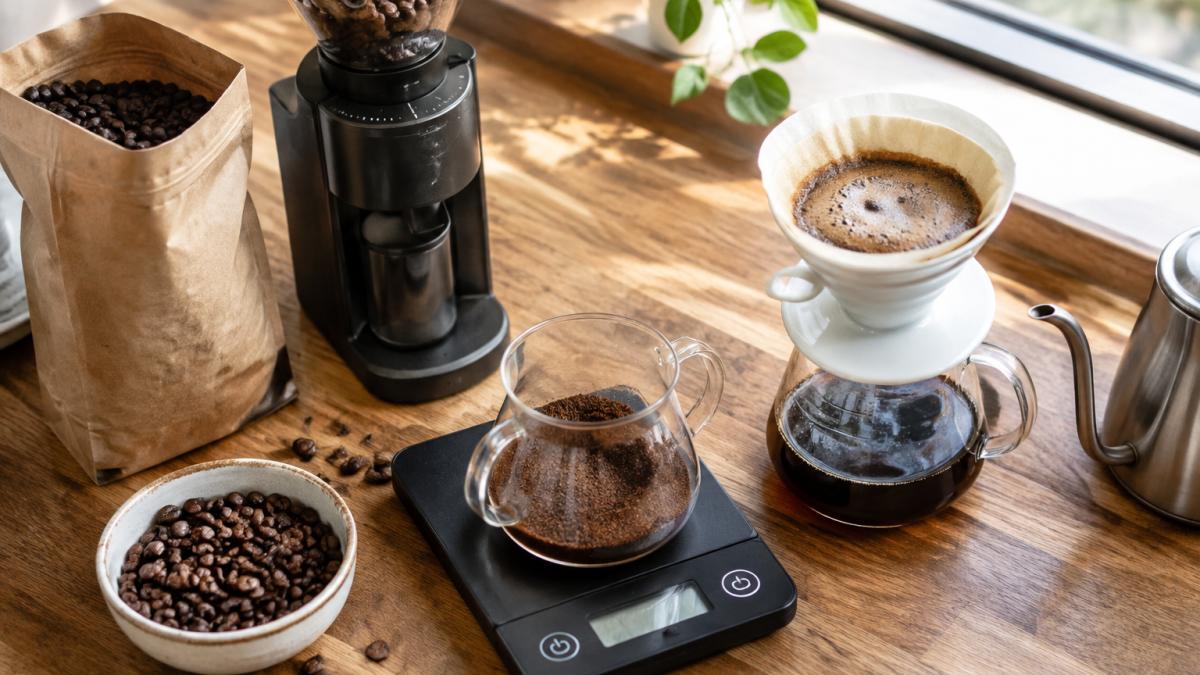
The dose is the lever most people overlook. Over-dosing by 3 grams per cup raises your per-cup cost by roughly a third. Weigh your grounds for a week and you'll likely find you're using more than you thought.
Most comparisons stop there, but a like-for-like number has to account for three things the bag price hides: dose size, waste, and brewing method. Build the comparison on cost per brewed ounce, not cost per bag, so a 12-ounce bag and a 2-pound bag can be judged on the same scale.
Start with dose. A 10-gram dose in a 6-ounce cup is a stronger brew than a 10-gram dose in a 10-ounce mug, so the same beans cost more per ounce in the smaller cup.
Next, subtract waste. If you toss a quarter of each bag because it goes stale, your effective cost per usable cup rises by a third.
Finally, match the brewing method. Espresso uses a finer grind and a higher dose per shot, so the same beans cost more per ounce of espresso than per ounce of drip.
Run all three adjustments and you get a number you can trust against a café receipt. That is the figure to use when you decide whether buying your own beans is cheaper for the way you actually brew.
Whole Bean Coffee vs Ground Coffee Cost: Where the Money Goes
Whole bean coffee and pre-ground coffee often carry similar shelf prices, but they don't deliver the same value. Ground coffee starts losing aroma and flavor within days of opening because more surface area meets more oxygen. Whole beans hold their character far longer, so fewer bags go stale before you finish them.
That difference is the hidden cost line. A bag you toss half-finished costs double per usable cup. Buying whole bean and grinding just before brewing protects the investment. For a deeper look at why roast date and format matter, read our comparison of fresh roasted vs store bought coffee.
How Much Ground Coffee From 1 Pound of Beans
One pound of whole bean coffee yields about 45 grams-adjusted cups at a 10-gram dose, or roughly 38 cups if you brew stronger at 12 grams. That's the number to anchor your budget on. A household drinking two cups a day finishes a pound in about three weeks at the lighter dose.
Grind size affects volume slightly but not weight, so your yield stays predictable as long as you weigh rather than scoop. A level tablespoon is a rough guide, not a measurement. The scale is the tool that makes the math real.
Whole Bean Coffee vs K-Cups: Price per Serving Compared
Single-serve pods usually cost more per cup than bagged coffee beans, often two to three times as much once you divide the pod price by its small yield. Pods win on speed and cleanup. They lose on cost per serving and on flexibility, since you're locked into whatever roast the pod maker sells.
| Format | Typical Cost per Cup | Best For | Trade-off |
|---|---|---|---|
| Whole bean, home brewed | Lowest | Flavor, long-term savings | Needs a grinder and a few minutes |
| Pre-ground, home brewed | Low | Simplicity | Shorter shelf life after opening |
| Single-serve pods | Highest | Speed, single drinkers | Cost per serving, limited choice |
| Café cup | Highest overall | Convenience, social ritual | You pay for labor and overhead |
Equipment Costs and the Break-Even Point
Equipment is where the break-even math lives, and it is the line most cost comparisons quietly ignore. If you're weighing the upgrade, our breakdown of whether a burr grinder beats a blade grinder walks through the difference.
The break-even point is simple: divide your total equipment spend by your monthly café savings. If home brewing saves you $40 a month and your setup cost $160, you break even in four months. After that, every cup is nearly pure savings.
To make that math honest, build a total cost of ownership instead of looking only at the sticker price. List every piece you need to brew a cup you actually enjoy: the brewer, the grinder, a scale, a kettle if your method needs one, and the consumables that recur.
A practical way to run it: take your total first-year equipment and consumable spend, divide by the number of cups you expect to brew in that year, and add that figure to your bean cost per cup.
Replacement and maintenance costs are easy to forget, and a cheap brewer that wears out quickly can cost more per cup than a sturdier one that lasts longer. Factor in expected lifespan, not just purchase price, before you call a setup cheap.
Household Scenarios: How Much You Save at 1, 2, and 4 Cups a Day
Savings scale with volume. A single-cup-a-day drinker saves a modest amount each month, while a four-cup household can save several times that. The table below shows the shape of it, using a 50-cent home cup against a $3 café cup.
| Cups per Day | Café Spend per Month | Home Brew Spend per Month | Rough Monthly Savings |
|---|---|---|---|
| 1 | About $90 | About $15 | Around $75 |
| 2 | About $180 | About $30 | Around $150 |
| 4 | About $360 | About $60 | Around $300 |
Heavy drinkers get the most from buying coffee beans in larger quantities or through a subscription. If you brew several cups daily, it's worth checking whether a coffee subscription is worth the cost to see if recurring delivery improves the math further.
Waste, Freshness, and Storage: The Hidden Cost Line
The cheapest bag in the world is expensive if half of it goes stale. Coffee waste is the quiet budget killer: beans left in a warm, open container lose their best flavors within weeks, and grounds you never brew are money in the bin. Store beans in an airtight container away from light and heat, and buy quantities you'll finish in a few weeks.
Freshness also decides how much coffee you need per cup. Stale beans taste flat, so people dose heavier to compensate. Protecting your beans protects your per-cup cost. Our coffee storage guide covers containers and timing in detail.
Find Your Perfect Roast
The math points one direction: buying your own coffee beans and brewing at home is cheaper for nearly every household that drinks coffee regularly. The variable is quality, and that's where fresh roasting earns its place. At theITDGroup LLC, we roast to order so each bag arrives with the flavor and aroma intact, sourced from trusted farms and delivered to your door. Our single origins, from the cocoa notes of Brazil Santos to the milk chocolate and caramel of Ethiopia Natural, give you a clear starting point for your home setup. Get started with theITDGroup LLC and turn your daily cups into steady savings without giving up a rich, smooth brew.
Frequently Asked Questions
Are whole coffee beans cheaper than ground coffee?
Per ounce, whole bean and pre-ground coffee often sell for similar prices at the same quality tier. The real difference is what you get from each bag. Whole beans stay fresh longer because the oils and aromatics are sealed inside the bean until you grind them. Pre-ground coffee starts losing aroma within days of opening. If you drink a bag slowly, whole beans deliver more usable cups per dollar because less coffee goes stale and gets thrown out.
How much does a cup of coffee cost when you use whole beans?
Work it out with three numbers: bag price, bag weight, and your dose. A 12-ounce bag at $23.99 costs about $2.00 per ounce. A standard 10-gram dose for a 6-ounce cup works out to roughly $0.71 per serving before equipment. Larger doses or bigger mugs push that higher. Compare that to $3 to $5 for a café drip coffee or latte, and the per-cup savings add up fast across a month.
Is whole bean coffee cheaper than K-Cups?
Almost always, yes. Single-serve pods are typically priced per cup, and you cannot adjust the dose the way you can with whole beans. Whole beans let you dial in exactly how much coffee goes into each brew. A 12-ounce bag of single-origin beans at $23.99 brews roughly 34 standard cups.
How much ground coffee do you get from 1 pound of beans?
One pound is 16 ounces, or about 454 grams. At a 10-gram dose per cup, that is roughly 45 cups. Bump the dose to 12 grams for a stronger brew and you get about 38 cups. Weigh your dose once and the math becomes reliable.
Does grinding your own coffee save money?
The beans cost the same whether ground or whole, so the savings come from freshness and dose control. Pre-ground coffee stales faster, which pushes people to use more per cup to compensate. Grinding right before brewing preserves aroma, so a standard dose tastes fuller. Grinding right before brewing helps preserve the aroma of your beans.
