

Best Coffee Beans for Home Brewing: 2026 Guide
Table of Contents
- How to Choose the Best Coffee Beans for Home Brewing
- Quick Comparison: 10 Coffee Beans for Home Brewing
- Best Whole Bean Coffee for Everyday Brewing
- Best Espresso Beans for Home Brewing
- Best Coffee Beans for Cold Brew
- How to Store Coffee Beans for Lasting Freshness
- Cost Per Cup: What $23.99 Actually Gets You
- Conclusion
- Frequently Asked Questions
Last Updated: October 6, 2026
How to Choose the Best Coffee Beans for Home Brewing
Finding the best coffee beans for home brewing starts with two decisions: roast level and whether you want a single origin or a blend. Get those right, and the rest of the bag follows.
Freshness is the one variable you cannot fix later. According to the National Coffee Association's brewing guidance, water temperature between 195 and 205 degrees Fahrenheit and a correct grind size do more for flavor than any equipment upgrade.
Below, we break down roast levels, origin versus blend, and ten specific coffees for the way you actually brew.
Roast Level: What Each One Does to Your Cup
Roast level is the degree to which green coffee is heated, and it determines acidity, body, and how forgiving the bean is at home.
Light roasts keep more origin character: fruit, florals, brighter acidity. They also punish sloppy brewing.
If you drink your coffee with milk, a medium or medium-dark roast holds up better. If you drink it black and want the fruit-forward notes, start lighter.
Single Origin vs. Blend: Which Fits Your Routine
A single origin is coffee from one country, region, or farm, while a blend combines coffees from multiple sources for consistency.
Single origins change with each harvest. That is the appeal: you taste the place, and the flavor profile shifts year to year.
A common mistake is buying a delicate single origin and running it through a drip machine on a coarse, inconsistent grind.
Quick Comparison: 10 Coffee Beans for Home Brewing
Every coffee below is $23.99 per bag and roasted to order. Here is how they line up.
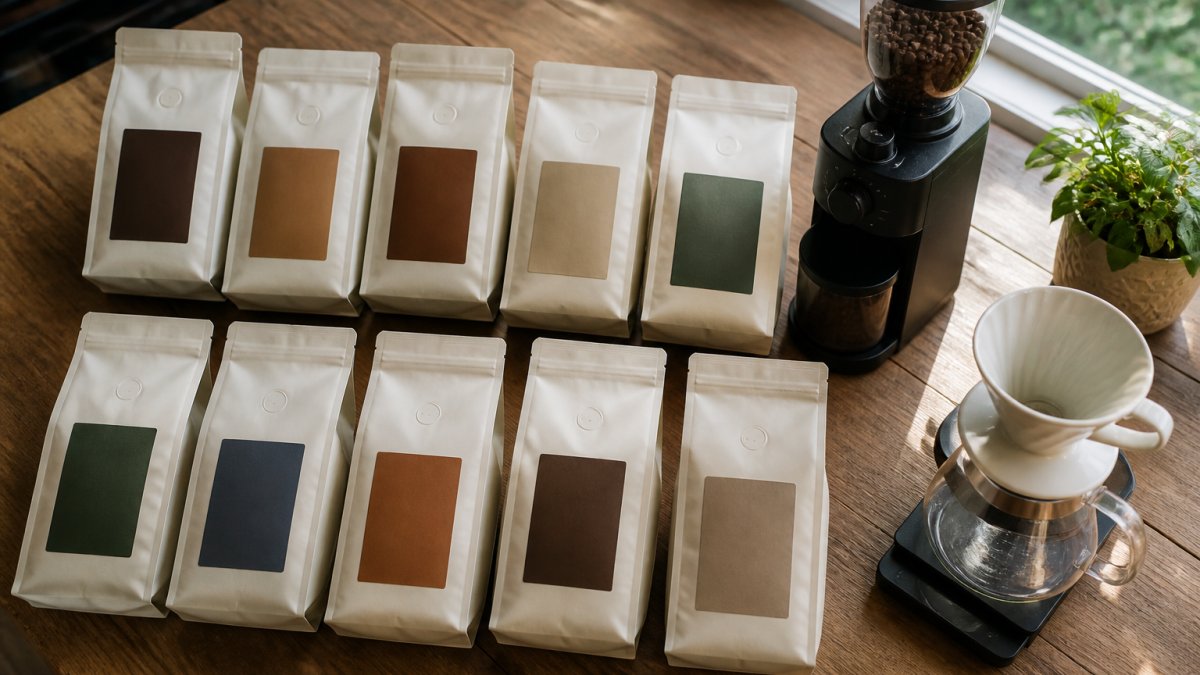
| Coffee | Roast | Tasting Notes | Best Brew Method |
|---|---|---|---|
| Breakfast Blend | Medium | Smooth, balanced | Drip, French press |
| House Blend | Medium | Nutty, sweet chocolate, citrus | Drip, pour-over |
| Brazil Santos | Medium | Cocoa, elegant, smooth | Drip, espresso |
| Guatemala | Medium | Dark chocolate, bright fruit, butterscotch | Pour-over, drip |
| Peru Decaf | Medium | Caramel, citrus, smooth | Drip, French press |
| Bali Blue | Med-dark | Dark chocolate, molasses, brown sugar | Espresso, French press |
| Latin American Blend | Med-dark | Nutty, mild fruit, cocoa | Espresso, moka pot |
| Ethiopia Natural | Med-light | Milk chocolate, fruity, caramel | Pour-over, cold brew |
| Tanzania | Med-light | Pear, floral, jasmine, strawberry | Pour-over, cold brew |
| Sumatra | Medium | Earthy, dark chocolate, dried fruit | French press, cold brew |
Best Whole Bean Coffee for Everyday Brewing
Whole bean coffee is the right default for anyone brewing at home more than twice a week. A burr grinder plus whole beans gives you control over grind size, and grind size is the lever that changes extraction most.
Breakfast Blend and House Blend
The Breakfast Blend is a medium roast of South American coffees, built for a smooth, uncomplicated cup. It is the one we would hand someone who just wants good coffee without thinking about it.
The House Blend goes a step further: a medium roast from Central and South America with nutty, sweet chocolate, and mild citrus notes and a clean finish.
Brazil Santos and Guatemala
Brazil Santos is a medium roast, pulped natural and sun dried, with cocoa notes and a smooth, elegant body.

Guatemala brings more brightness: dark chocolate, bright fruit, and butterscotch from fully washed beans grown in volcanic loam around Antigua. If you want a single origin that still plays well with a standard drip setup, this is it.
Best Espresso Beans for Home Brewing
Espresso rewards medium and medium-dark roasts. Lighter beans can work, but they demand a finer grind and tighter temperature control than most home setups deliver consistently.
Bali Blue and Latin American Blend
Bali Blue is a medium-dark single origin from smallholder farmers in Kintamani, hand picked and wet-hulled.

The Latin American Blend is a medium-dark blend of Latin American coffees with nutty hints, mild fruity tones, and a cocoa aftertaste.
For espresso, aim for a fine grind and watch the crema. Thin, pale crema usually means the grind is too coarse or the beans are past their peak.
Best Coffee Beans for Cold Brew
Cold brew is a different extraction problem than hot brewing. Water at room temperature pulls fewer of the bright acids and more of the chocolate, nut, and sugar notes, so the beans that taste delicate in a pour-over can taste hollow after a 16-hour steep. The rule of thumb most home brewers land on: pick a medium or medium-dark roast with low acidity and enough body to survive the long soak.
Matching the Bean to the Recipe
Start with a 1:8 concentrate ratio by weight, for example, 100 grams of coarsely ground coffee to 800 grams of filtered water. Grind coarse, roughly the texture of raw sugar or sea salt. If the grind looks like what you use for drip, it is too fine, and you will get a muddy, over-extracted concentrate that clogs the filter.
A few variables worth adjusting one at a time:
- Longer steep, coarser grind, more body, less bitterness.
- Shorter steep, finer grind, brighter cup, but higher risk of astringency.
- Higher ratio (1:10 or 1:12), ready-to-drink without dilution; convenient, but less concentrated for milk drinks.
Our Picks
Sumatra is our pick here. It is earthy with dark chocolate, dried fruit, medium acidity, and a long, syrupy body, wet-hulled in Aceh. Those heavy notes carry through a 12-to-18-hour steep and hold up when you cut the concentrate with milk.
Ethiopia Natural is the other direction: a medium-light natural process coffee with milk chocolate, fruit, and caramel. Use it if you want a sweeter, fruitier cold brew rather than a deep, earthy one, and shorten the steep to 12 hours so the fruit stays forward. Tanzania, with pear, jasmine, and strawberry notes, works the same way.

Cold Brew vs. Iced Coffee
These are not the same drink, and the bean choice differs. Iced coffee is hot-brewed coffee chilled quickly, so it keeps the acidity and aromatics of a hot extraction, a medium or medium-light single origin like Guatemala works well. Cold brew is a slow cold extraction, so it rewards beans with body and low acidity. If you brew hot and chill it, do not leave it sitting on a warm burner; that is what makes iced coffee taste flat and stale.
How to Store Coffee Beans for Lasting Freshness
Freshness is the one variable you cannot fix after the fact, and it is the variable most bags hide. A roast date tells you when the clock started; a "best by" date tells you almost nothing, because it is often set a year or more out from the roast. When you buy, look for a printed roast date, not a best-by date.
The Freshness Timeline
Coffee does not peak the day it is roasted. It degasses carbon dioxide for the first several days, which is why a bag roasted yesterday can taste flat or sharp. A common pattern:
- Days 1-3 after roast, heavy degassing; espresso in particular pulls thin and gassy.
- Days 4-14, the peak window for most brew methods; aromatics are at their fullest.
- Days 15-30, still good, but the brightest notes fade first; light roasts decline faster than dark roasts.
Whole bean holds its peak for a few weeks after the roast date. Ground coffee stales in days, because the surface area exposed to oxygen multiplies. That is the single strongest argument for buying whole bean and grinding just before you brew.
Storage That Actually Works
The goal is to limit three things: oxygen, light, and moisture. Store whole beans in an airtight, opaque container at room temperature, away from the stove, the window, and the dishwasher. Do not refrigerate them. The refrigerator cycles through temperature and humidity changes every time you open the door, and coffee absorbs both, plus the odors of whatever else is in there.
Freezing works if you do it properly:
- Seal the beans in an airtight bag or vacuum-sealed portion, squeezing out as much air as possible.
- Freeze once, and do not thaw and refreeze. Each cycle pulls moisture onto the beans.
- Grind from frozen without thawing. A quality burr grinder handles frozen beans fine, and it preserves more aroma than letting them come to room temperature.
Buy the Size You Will Finish
Buy in the bag size you will finish in two to three weeks. A larger bag at a lower unit price is not a bargain if the last third goes stale. This is the practical argument for roasted-to-order coffee: the roast date is recent when the bag arrives, so your clock starts later. A 12-ounce bag at a 16-gram dose is about 21 cups, which is roughly two to three weeks for one daily drinker, a sensible default size.
Cost Per Cup: What $23.99 Actually Gets You
A $23.99 bag looks expensive next to a supermarket can. Per cup, it usually is not.
A standard 12-ounce bag of whole bean coffee makes roughly 16 to 24 cups, depending on your dose.
Blends and single origins from theITDGroup LLC all sit at the same $23.99 price, so the decision comes down to flavor, not budget.
Conclusion
The hard part of home brewing is not the equipment. It is buying beans fresh enough and matching them to how you actually brew. Get the roast level right, keep the bag sealed, and grind just before you brew.
theITDGroup LLC roasts every order to order, so the bag that arrives is at its peak rather than past it. Start with the Breakfast Blend or House Blend for everyday drip, move to Bali Blue or the Latin American Blend for espresso, and reach for Sumatra when cold brew season starts.
Frequently Asked Questions
Should you buy whole-bean or pre-ground coffee for home brewing?
Whole bean wins for flavor. Ground coffee starts losing aroma within minutes of grinding because the surface area exposed to oxygen multiplies. A burr grinder lets you match grind size to your brew method: coarse for cold brew, medium for drip, fine for espresso. If you cannot grind at home, buy small bags and use them within a week. Otherwise the best coffee beans for home brewing are the ones you grind right before brewing.
What roast level is best for home-brewed coffee?
It depends on your brew method and taste. Medium roasts like Brazil Santos and Guatemala keep sweetness and origin character intact, which suits drip and pour-over. Medium-dark roasts such as Bali Blue hold up in espresso and milk drinks because the darker sugars survive the pressure. Light roasts like Tanzania shine in pour-over but can taste sour in espresso if your grind is off. Match roast to method, not to habit.
How fresh should coffee beans be for home brewing?
Peak flavor sits between 4 and 21 days after the roast date. Beans roasted to order arrive close to that window, while supermarket bags often sit for months. Check the roast date, not the best-by date. Once opened, use the bag within two to three weeks. If you brew espresso, wait 5 to 7 days after roasting for the crema to settle, since very fresh beans release too much gas.
Are espresso beans different from regular coffee beans?
The bean itself is the same species. The difference is roast level and how the coffee is blended for pressure extraction. Espresso beans for home brewing usually land at medium-dark to dark, which builds body and cuts acidity. Bali Blue and Latin American Blend both fit that profile. You can pull espresso from a medium roast, but expect brighter shots with less crema. Grind size matters more than the label on the bag.
How should you store coffee beans at home?
Keep them away from air, light, heat, and moisture. An opaque, airtight container in a cool cabinet works for daily use. For longer storage, freeze the whole bag in a sealed freezer bag and scoop out what you need without thawing the rest. Never store beans in the fridge door, where temperature swings and odors get in. Buy in sizes you will finish within three weeks.