

What Makes Coffee Beans Premium Quality: A 2026 Guide
Table of Contents
- What Makes Coffee Beans Premium Quality? The 6 Factors That Decide It
- Origin Transparency and Growing Altitude: Where Premium Coffee Begins
- Processing Methods and Their Effect on Cup Quality
- Specialty Grade Coffee Standards: What the Score Actually Means
- Visual Signs of Bean Quality: Uniform Size, Color, and Defects
- Coffee Bean Roast Date Importance: Why Freshness Beats Everything Else
- How to Store Coffee Beans for Freshness After You Buy
- Building a Quality Checklist for Your Brewing Method
- Frequently Asked Questions
Last Updated: October 7, 2026
What Makes Coffee Beans Premium Quality? The 6 Factors That Decide It
What makes coffee beans premium quality comes down to six measurable factors: origin transparency, growing altitude, processing method, specialty grade score, physical bean condition, and freshness after roasting.
That matters because "premium" is one of the least regulated words in the coffee aisle. Any roaster can print it on a bag.
Below, we break down each factor in order, explain how professionals actually score coffee, and give you a practical checklist to use before your next purchase.
Origin Transparency and Growing Altitude: Where Premium Coffee Begins
Premium coffee starts with a label that tells you exactly where the beans grew and how high. A traceable bag names the region, the farm or cooperative, the altitude, and the variety. Vague labels like "mountain grown" or "100% arabica" tell you almost nothing about quality.
Why High-Grown Coffee Tastes Different
Coffee grown at higher altitudes develops more slowly. That slower maturation lets the bean concentrate sugars and acids, which is why high-grown coffee typically shows brighter acidity, more layered flavor, and a cleaner finish than coffee grown at low elevations.
Our Ethiopia Natural, for example, is grown between 1,700 and 1,900 meters in the Sidama Zone, and the Kenya comes from 1,700 to 1,890 meters in Nyeri County.

Reading a Traceable Label
A genuinely traceable label answers four questions: country and region, farm or cooperative, altitude, and variety. If a bag skips two or more of those, treat the "premium" claim with caution. The Specialty Coffee Association's green coffee standards outline how origin and grade information should be documented through the supply chain.
Processing Methods and Their Effect on Cup Quality
Processing method shapes flavor as much as origin does. After harvest, ripe cherries are turned into green coffee through one of three main routes, and each leaves a distinct fingerprint in the cup.
- Washed process: Fruit is removed before drying. Produces clean, bright, acidic cups with clear origin character.
- Natural process: Cherries dry whole with the fruit still attached. Produces heavier body and fruity, fermented notes.
- Honey process: Some fruit mucilage stays on during drying. Lands between the two, with sweetness and mild fruit.
The SCA's research on processing and flavor documents how these methods change the chemistry of the bean before it is ever roasted. Our Guatemala is fully washed and sun dried, while the Ethiopia Natural is dried whole on raised beds, which is why one tastes of dark chocolate and butterscotch and the other of milk chocolate and fruit.

Specialty Grade Coffee Standards: What the Score Actually Means
Specialty grade coffee is green coffee that scores 80 points or higher out of 100 on the standardized cupping scale, with zero primary defects (Category 1) in a 350-gram sample. Anything below 80 is commercial grade, regardless of how it is marketed. The number is not a vibe, it comes from a defined protocol that any licensed Q Grader can reproduce.
How Professional Cupping and Scoring Works, Step by Step
Cupping is the industry's standardized tasting method, and the sequence matters because every step is designed to remove variables:
- Sample roast. A small batch is roasted light, within a defined window (typically 8-12 minutes to first crack), and rested for at least 8 hours. The roast is deliberately neutral so it does not flatter or hide the green coffee.
- Weigh and grind. Exactly 8.25 grams of coffee per 5.07 fluid ounces (150 ml) of water, ground to a medium-coarse setting. Each cup is identical.
- Pour and steep. Water just off boil (around 200-205°F) is poured over the grounds, and the crust is left to steep for 4 minutes.
- Break the crust. The grader stirs the crust three times, leans in, and evaluates fragrance (dry grounds) and aroma (wet crust), the first two scored attributes.
- Skim and cool. Foam and grounds are skimmed off. The cups cool toward 160°F, then 140°F, because different compounds express at different temperatures.
- Slurp and score. The grader takes a spoonful, slurps to spread the liquid across the palate, and scores the remaining attributes.
The Ten Attributes, and What Each One Actually Measures
Each attribute is rated on a 6-to-10 scale (6 = good, 7 = very good, 8 = excellent, 9 = outstanding, 10 = exceptional):
- Fragrance/Aroma: Dry and wet scent.
- Flavor: The main taste impression, the core of the score.
- Aftertaste: How long and how cleanly flavor lingers.
- Acidity: Brightness and liveliness, not sourness.
- Body: Weight and texture on the palate.
- Balance: Whether attributes harmonize rather than one dominating.
Reading the Score Bands
- 80-84.99: Very good, specialty grade
- 85-89.99: Excellent
- 90+: Outstanding, rare
What most buyers miss is that a score is a snapshot. It reflects one sample, one roast, one day, and one grader's palate. Two Q Graders can land a point or two apart on the same coffee. Treat the score as a useful benchmark, not a permanent guarantee, and be skeptical of any bag that prints a number without naming who cupped it or when.
Visual Signs of Bean Quality: Uniform Size, Color, and Defects
Visual inspection catches problems a label hides, but the defects you see in the bag usually start long before roasting. Understanding where they come from is what separates a real quality check from a cosmetic one.
Where Defects Actually Originate
Most visible flaws trace back to three farm-level decisions:
- Selective picking. Ripe cherries are picked by hand, one at a time. Strip-picking, pulling every cherry off a branch at once, mixes underripe and overripe fruit into the lot, and those beans dry unevenly, cup inconsistently, and often show up as faded or sour defects.
- Sorting. After picking, cherries are floated in water (dense, ripe cherries sink; unripe and damaged ones float) and then hand-sorted on a table before drying. Farms that skip or rush this step pass defects downstream.
- Drying and storage. Uneven drying on a patio or raised bed, or green coffee stored in humid conditions, produces mold, phenol, and faded beans that no roast can fix.
The Defect Count That Matters
Specialty grade requires zero Category 1 (primary) defects in a 350-gram sample. Primary defects include full black, full sour, pod/cherry, and severe insect damage, each counts as a full defect.
This is why a single black bean in a bag is not a dealbreaker, but a scattering of them is a signal. It tells you the lot was not sorted to specialty standard.
What to Look For at Home
Pour a handful of beans onto a light surface and check consistency first.
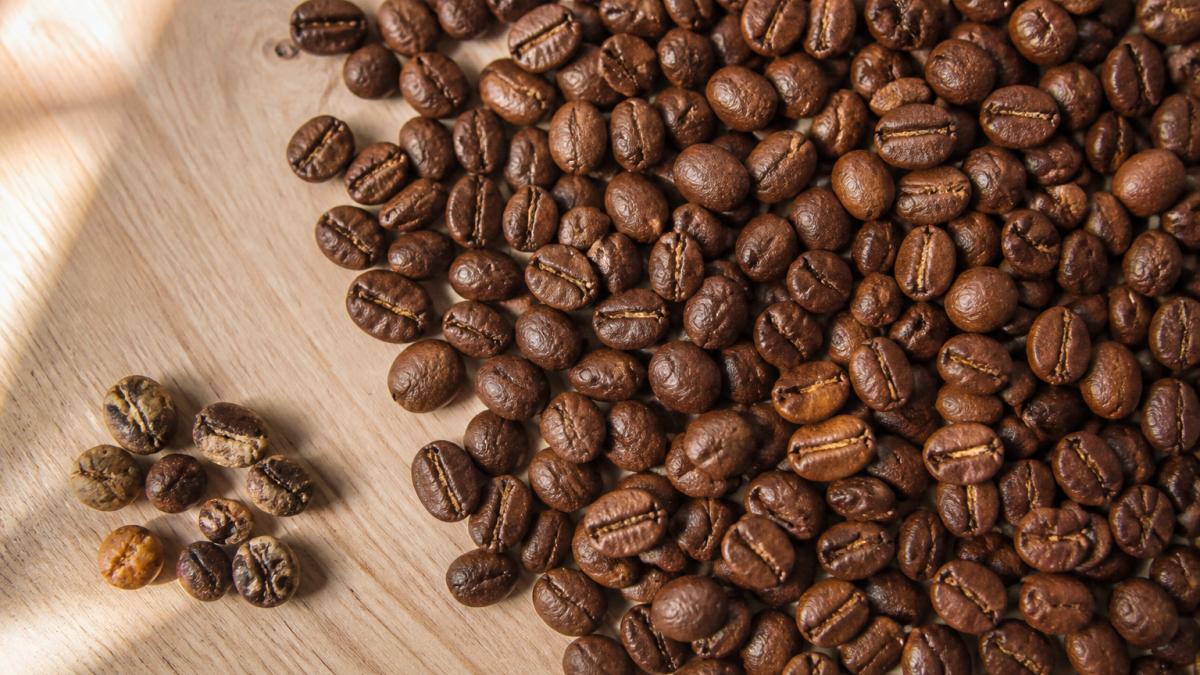
- Uniform size and color: Signals careful sorting and even roast development.
- Cracks and broken beans: Often from poor storage or rough handling; they stale faster.
- Discoloration: Black, sour, or faded beans usually mean processing or drying problems.
- Foreign matter: Stones, sticks, or chaff point to weak sorting standards.
A common mistake is judging quality by roast color alone. A dark roast can mask defects that a medium roast would reveal, which is one reason roasters who want to showcase quality tend to roast lighter.
Coffee Bean Roast Date Importance: Why Freshness Beats Everything Else
Roast date matters more than any other date on the bag. Coffee is at its best roughly 4 to 14 days after roasting, and it declines steadily after that. A "best by" date tells you nothing about when the beans were actually roasted.
This is why we roast to order at theITDGroup LLC. Every batch ships close to its roast date rather than sitting in a warehouse.
How to Store Coffee Beans for Freshness After You Buy
Storing coffee beans correctly means protecting them from four enemies: oxygen, moisture, heat, and light. Get those under control and you preserve most of the flavor you paid for.
- Transfer beans to an airtight container within a day of opening the bag
- Keep the container in a cool, dark cupboard, not the fridge
- Store whole beans and grind immediately before brewing
- Buy in quantities you will finish within two to four weeks
- Avoid clear containers on open shelves where light hits them
The freezer works only if you seal beans airtight and use them without repeated thawing. For daily drinking, a simple airtight container in a dark cupboard beats every complicated method.
Building a Quality Checklist for Your Brewing Method
The right quality signals depend on how you brew. A method that rewards clarity needs different beans than one that rewards body.
| Brewing Method | What to Prioritize | Best Bean Match |
|---|---|---|
| Pour-over | Bright acidity, clean cup | Kenya |
| Espresso | Body, balance, low bitterness | Bali Blue |
| French press | Heavier body, chocolate notes | Guatemala |
| Drip | Balance, consistency | Ethiopia Natural |
Use the table as a starting filter, then check the bag against the six factors above. For pour-over, our Kenya brings the bright, effervescent acidity and citrus notes that method rewards. For espresso and milk drinks, the Bali Blue's dark chocolate and molasses profile holds up without turning harsh.

Frequently Asked Questions
How can you tell if coffee beans are high quality?
Start with the roast date, not the best-by date. Premium coffee beans are stamped with the day they were roasted, and they taste best within two to four weeks of that date. Then check the label for origin details: farm or region, growing altitude, variety, and processing method. Beans grown above 1,200 meters, sorted for uniform size and color, and free of cracks or discoloration are strong indicators of premium coffee. Finally, look for a cupping score of 80 or higher, which is the threshold for specialty coffee.
What coffee beans are considered higher quality?
Higher-quality beans typically come from single-origin lots grown at high altitude, hand-picked when cherries are ripe, and processed with care. The variety matters too: heirloom cultivars, Bourbon, Typica, SL28, and SL34 are known for complex flavor. Beans that score 80 points or above on the Specialty Coffee Association scale qualify as specialty grade. Transparency also counts, because premium coffee comes with traceable information about the farm, region, and processing method rather than a vague country label.
Does the roast date affect coffee bean quality?
Yes, and it is one of the biggest factors you can control. Coffee beans begin losing aroma and flavor within days of roasting as they release carbon dioxide and oxidize. Beans roasted within the past two to four weeks deliver the fullest flavor, balance, and complexity. A bag with only a best-by date gives you no way to judge freshness. Look for a printed roast date and buy from roasters who roast to order, so the coffee reaches you close to peak flavor.
How should I store coffee beans to keep them fresh?
Keep beans in an airtight container away from light, heat, and moisture. A opaque canister stored in a cool cupboard works well; avoid the fridge because condensation damages beans each time you open the door. The freezer is an option for long-term storage if you seal beans in a vacuum bag and let them come to room temperature before grinding. Buy in quantities you will finish within a few weeks, and grind just before brewing to protect aroma and flavor.
Judging coffee quality gets easier once you know which claims are checkable and which are just marketing. At theITDGroup LLC, we source beans from trusted farms, roast to order for maximum flavor and aroma, and back every bag with a fresh roast guarantee and reliable delivery. Find your perfect roast and taste the difference a real roast date makes.