

Small-Batch Roasted Coffee: Benefits Explained
Table of Contents
- What Small-Batch Roasted Coffee Means
- Superior Flavor Clarity and Profile Development
- Guaranteed Freshness and Roast Date Transparency
- How Long to Wait to Drink Freshly Roasted Coffee
- How to Store Freshly Roasted Coffee
- Small-Batch Coffee vs. Mass-Produced Coffee
- Precision Roasting and Quality Control
- Frequently Asked Questions
Last Updated: October 11, 2026
What Small-Batch Roasted Coffee Means
Small-batch roasted coffee refers to coffee beans roasted in limited quantities, prioritizing precision and control over volume. Each batch receives individual attention from the roastmaster, who monitors temperature, timing, and roast progression to achieve the desired flavor profile for that specific batch of green coffee beans.
Batch size directly influences quality outcomes. Smaller batches allow roasters to respond quickly to variables like bean moisture content, ambient temperature, and desired roast level, making real-time adjustments that preserve the unique characteristics of the coffee origin.
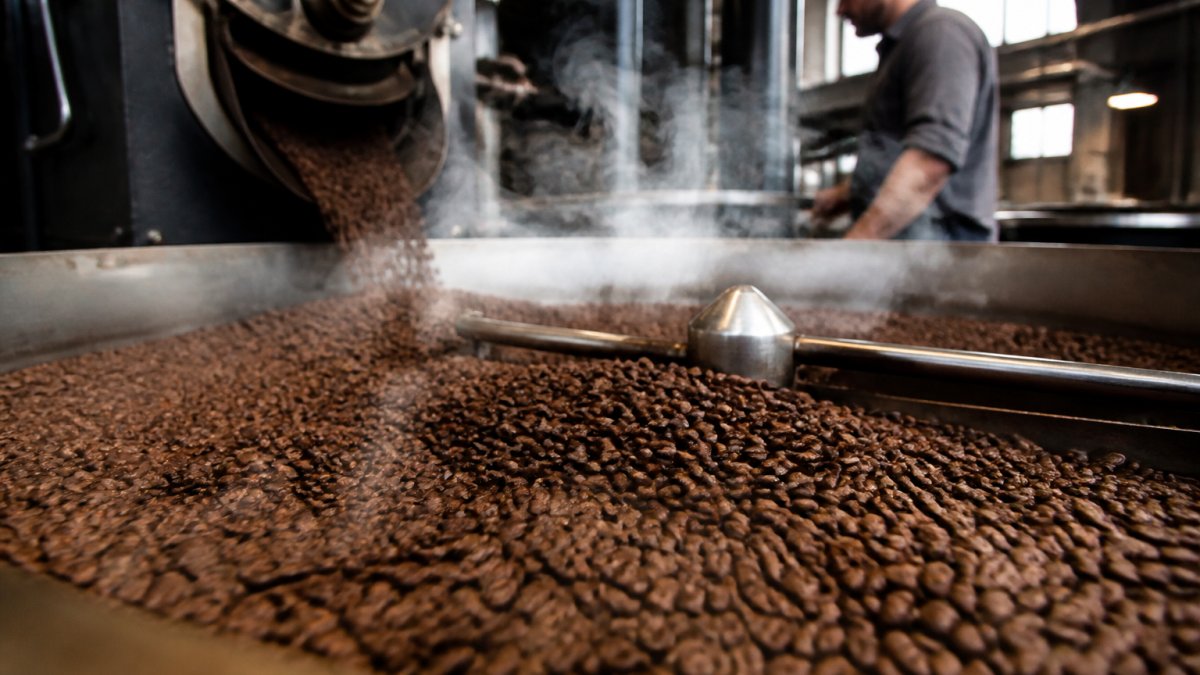
This precision-focused approach contrasts with large-scale commercial roasting, where consistency takes priority over individual batch optimization.
Superior Flavor Clarity and Profile Development
The flavor difference between small-batch roasted coffee and commodity-grade beans comes down to roast control. Adjusting heat application throughout the roasting process unlocks flavor complexity that mass-produced roasting cannot achieve.
Small-batch roasting allows the roastmaster to develop specific flavor notes intentionally. The Ethiopia Natural from our collection features a medium-light roast bringing out milk chocolate, fruity, and caramel notes through precise temperature management, highlighting what makes that Ethiopian coffee distinctive.

Flavor clarity refers to how distinctly you can taste individual notes in your cup. Small-batch roasting maintains stable conditions, producing clearer, more defined flavor characteristics, while large-batch roasting introduces temperature variations that muddy flavor clarity.
The roast profile becomes a tool for expression in small-batch operations. Our Guatemala, sourced from smallholder farmers in Antigua, receives a medium roast to emphasize dark chocolate, bright fruit, and butterscotch notes, results that vary by origin.
Guaranteed Freshness and Roast Date Transparency
Freshness determines whether you taste the roastmaster's intended flavor profile or a degraded version. Small-batch roasted coffee typically ships with a roast date printed on the bag, providing transparency that mass-produced coffee rarely offers.
A bag roasted two weeks ago tastes noticeably different from one roasted two months ago, as flavor intensity diminishes, acidity becomes muted, and sweetness flattens.
Large-scale roasters often roast weeks or months before beans reach retail shelves, causing significant flavor loss. Small-batch roasters roast to order or in small quantities, ensuring shorter time between roasting and purchase, preserving the roastmaster's work.
What to Look for When Buying Small-Batch Roasted Coffee
Use this checklist to evaluate small-batch coffee before buying:
Roast Date: Look for a date printed on the bag. Ideally, purchase coffee roasted within the past two weeks; beyond four weeks, flavor has noticeably declined.
Origin and Processing Details: Small-batch roasters should specify country, region, and farm or cooperative name. Processing method (washed, natural, honey-processed) affects flavor and degassing timeline.
Roast Level: Light, medium, and dark roasts have different peak flavor windows (light: days 5-7; medium: day 10; dark: days 12-14). The roaster should indicate roast level on the bag.
Packaging: Bags with one-way valves allow CO2 to escape while preventing oxygen from entering, extending freshness. Avoid bags without valves or transparent windows.
Brewing Recommendations: Quality small-batch roasters include guidance on grind size, water temperature, and brew method, signaling they've evaluated the coffee and understand extraction.
Freshness Timeline and Peak Flavor Window
Small-batch roasted coffee follows a predictable freshness arc:
- Days 1-5: Beans are degassing heavily; CO2 can interfere with extraction. Not recommended for brewing.
- Days 5-7: Light roasts may reach drinkability; flavor is bright but can taste slightly sharp.
- Days 7-21: Peak flavor window. Degassing is complete and the roastmaster's intended profile shines through.
- Days 21-30: Flavor remains good but begins to flatten; acidity softens and sweetness diminishes.
- Beyond day 30: Coffee is drinkable but noticeably stale; flavor becomes muted.
This timeline assumes proper storage (airtight container, room temperature, away from light and heat). Improper storage can accelerate staleness by 50 percent or more.
Why Roast Date Transparency Matters
Roast date transparency protects you from stale inventory and signals the roaster's confidence in product quality. Mass-produced coffee rarely includes roast dates, which is a red flag.
How Long to Wait to Drink Freshly Roasted Coffee
Freshly roasted coffee requires a resting period before brewing. Beans release carbon dioxide (CO2) for several days after roasting; brewing before degassing completes results in flat, bitter coffee.
Most roasters recommend waiting 5 to 10 days after the roast date before brewing. Coffee begins noticeable flavor decline after about four weeks.
The sweet spot for small-batch roasted coffee falls between days 7 and 21 after roasting, when beans have degassed adequately and the roastmaster's flavor development shines through clearly.
Light roasts may be ready slightly sooner than dark roasts due to less residual CO2. Medium roasts like Colombia and Guatemala typically reach peak flavor around day 10.
How to Store Freshly Roasted Coffee
Storage conditions directly impact how long your small-batch roasted coffee maintains its flavor. Protect beans from air, light, heat, and moisture to extend the peak flavor window.
Store roasted beans in an airtight container in a pantry or cupboard at room temperature (65-70°F), away from sunlight and heat. Avoid refrigerators and freezers unless storing beyond six months, as they introduce moisture risk.
The original bag is typically designed for storage with one-way valves. Keep it sealed between uses. If transferring beans, use glass or ceramic with an airtight seal, not plastic.
Whole beans store longer than ground coffee. Use ground coffee within two to three days, as grinding accelerates oxidation and aroma loss.
Small-Batch Coffee vs. Mass-Produced Coffee
The differences between small-batch roasted coffee and mass-produced alternatives extend beyond flavor. Understanding these distinctions helps explain why small-batch coffee commands premium pricing and when each approach makes sense.
| Aspect | Small-Batch Roasted | Mass-Produced |
|---|---|---|
| Roast Control | Individual attention per batch | Standardized, automated process |
| Freshness | Roasted to order, roast date known | Weeks or months old at purchase |
| Flavor Profile | Intentionally developed, origin-specific | Consistent but less complex |
| Batch Size | 5-50 pounds typical | 500+ pounds per batch |
| Quality Variation | Minimal within batch | Higher variation across batches |
| Price Point | Premium ($18-28 per bag typical) | Budget-friendly ($8-12 per bag) |
| Availability | Limited, may sell out | Widely available year-round |
| Batch-to-Batch Variation | Expected and documented | Standardized to minimize variation |
How Small-Batch Roasting Achieves Better Flavor
Mass-produced coffee prioritizes consistency and cost efficiency. Large roasters cannot adjust their process for individual batches because the volume makes real-time changes impractical. They develop a roast profile that works acceptably for a given origin, then apply it uniformly across hundreds of pounds of beans. The result is predictable but often lacks the flavor complexity of small-batch roasting.
Small-batch roasters accept higher production costs in exchange for flavor quality and freshness. The roastmaster's skill becomes the product. Each origin receives a roast profile tailored to its characteristics, accounting for factors like bean density, moisture content, and the specific terroir of the harvest. This approach produces coffee that tastes noticeably better to trained palates and coffee enthusiasts who can detect the difference between a generic medium roast and one designed specifically for that origin's potential.
Trade-Offs: Cost, Availability, and Consistency
Small-batch roasting is not universally better; it involves real trade-offs that matter depending on your priorities.
Higher Price: Small-batch roasting requires more labor per pound and direct relationships with specialty importers or farms, driving retail prices 50-150 percent higher than mass-produced alternatives.
Limited Availability: Small-batch roasters often roast specific origins in limited quantities. A coffee you love may sell out and not be available again until the next harvest. Mass-produced coffee is designed for consistent year-round availability. If you need reliable access to the same coffee every week, small-batch roasting may frustrate you.
Batch-to-Batch Variation: Because each batch receives individual attention, subtle differences can occur between roasts of the same origin. One batch of Ethiopia Natural might taste slightly brighter than the previous batch due to differences in bean moisture or ambient temperature during roasting. Some coffee enthusiasts enjoy this variation as a sign of craft; others find it inconsistent. Mass-produced coffee minimizes this variation through standardized processes, which appeals to consumers who want predictability.
Storage and Handling: Small-batch roasted coffee requires more attention to storage and timing. You need to understand roast dates, degassing windows, and proper storage to get the best flavor. Mass-produced coffee, already stale at purchase, is more forgiving, it won't degrade much further if you store it poorly.
Environmental and Waste Considerations
Small-batch roasters typically produce less waste because they roast closer to demand. Mass producers often hold inventory, which eventually becomes too stale to sell and gets discarded. Roasting to order eliminates that waste entirely. However, small-batch roasting does not automatically mean lower energy consumption or emissions, that depends on the roaster's equipment, sourcing practices, and shipping methods. Claims about sustainability should be evaluated on a roaster-by-roaster basis rather than assumed as an inherent benefit of small-batch roasting.
When to Choose Each Approach
Choose small-batch roasted coffee if:
- You value flavor complexity and are willing to pay a premium for it.
- You enjoy exploring different origins and appreciate intentional roast profiles.
- You have the storage space and attention to detail for proper bean care.
- You want to know the roast date and have confidence in freshness.
- You prefer supporting small businesses and direct trade relationships.
Choose mass-produced coffee if:
- Your budget is limited and you need affordable coffee.
- You drink large volumes and need consistent year-round availability.
- You prefer simplicity and don't want to worry about roast dates or storage.
- You value consistency above all else and want the same cup every time.
- You are new to specialty coffee and want to explore without committing to premium pricing.
Precision Roasting and Quality Control
Precision roasting distinguishes small-batch operations from larger commercial roasteries. The roastmaster uses sensory evaluation and temperature monitoring to guide each batch through the roasting process.
During roasting, beans progress through distinct stages: drying, browning, and development. The roastmaster listens for the "first crack" (when beans begin to pop) and monitors for the "second crack" (a secondary popping sound).
Small-batch roasters invest in equipment that provides precise temperature control and allows quick adjustments. A skilled roastmaster can increase or decrease heat application within seconds, responding to how the beans are developing. This responsiveness prevents over-roasting or under-roasting while maximizing flavor development.
Quality control in small-batch roasting includes cupping, a formal tasting process where the roastmaster evaluates the roasted coffee against the intended flavor profile. This step ensures consistency and identifies any issues before beans ship to customers.
Traceability is another quality control advantage. Small-batch roasters typically work directly with specific farms or importers, creating relationships that ensure bean quality and consistency.
The real difference between ordinary coffee and small-batch roasted coffee comes down to intentionality. Our carefully sourced single-origin beans like Bali Blue, Ethiopia Natural, Colombia, and Guatemala each receive roast profiles tailored to their unique characteristics.


Frequently Asked Questions
What are the main benefits of small-batch roasted coffee compared to mass-produced coffee?
Small-batch roasted coffee delivers superior flavor clarity because roastmasters control temperature and roast time precisely for each batch. Mass-produced coffee prioritizes volume over precision, often resulting in inconsistent roasts and stale beans. Small-batch roasting also guarantees freshness, beans are roasted to order and reach you within days, not weeks. You get bean-specific characteristics highlighted rather than masked by over-roasting, and reduced waste means less stale inventory in the supply chain.
How long should you wait to drink freshly roasted coffee after the roast date?
Most freshly roasted coffee reaches peak flavor 3-7 days after roasting, once the degassing period completes. Drinking immediately after roasting can taste flat or overly sharp. However, small-batch roasted beans maintain excellent quality for 2-4 weeks when stored properly in an airtight container away from heat and light. For optimal results, check your roast date and plan to brew within this window before the beans begin to fade.
What's the best way to store freshly roasted coffee to keep it fresh?
Store small-batch roasted coffee in an airtight container, glass jars with tight seals or specialty coffee canisters work best. Keep the container in a cool, dark place away from direct sunlight, heat sources, and humidity. Avoid refrigerators and freezers unless you're storing for longer than one month. Whole beans last 2-4 weeks; ground coffee loses freshness faster, so grind only what you'll use within a few days. Proper storage preserves the aroma, acidity, and flavor clarity that small-batch roasting delivers.
Does small-batch roasting really make a noticeable difference in taste?
Yes. Small-batch roasting allows roastmasters to adjust temperature and timing to highlight each origin's unique characteristics, the fruity notes in Ethiopian beans, the chocolate sweetness in Bali beans, or the bright acidity in Colombian varieties. Mass-produced roasting uses one-size-fits-all profiles that often result in flat, overroasted flavors. Precision roast control means you taste the bean's true origin qualities rather than a generic coffee taste. Freshness amplifies this difference; small-batch beans roasted to order preserve these flavor notes far better than stale commercial stock.