

How to Store Tea Leaves Properly: Keep Tea Fresh
Table of Contents
- Why Proper Tea Storage Decides How Your Cup Tastes
- How to Keep Tea Fresh: The Four Enemies to Block
- Best Tea Storage Containers: What Actually Works
- Step-by-Step: How to Store Tea Leaves Properly
- How Long Does Loose Leaf Tea Last?
- Tea Storage Mistakes That Cost You Flavor
- Storing Different Teas: Matcha, Earl Grey, Mint, and Hojicha
- Conclusion: Build a Storage Routine That Protects Every Batch
- Frequently Asked Questions
Last Updated: October 8, 2026
Why Proper Tea Storage Decides How Your Cup Tastes
You can buy the best loose leaf tea in the world, and it will still taste flat if you store it wrong. This guide from theITDGroup LLC breaks down how to store tea leaves properly, so every cup tastes as fresh as the day it arrived.
Tea storage is the practice of protecting dry tea leaves from light, heat, air, moisture, and strong odors so they keep their flavor, aroma, and color. Get it right, and a good batch stays vibrant for months. Get it wrong, and even premium leaves turn dull within weeks.
Here's the part most guides skip: tea is not a shelf-stable rock. It is a dried plant that keeps absorbing whatever surrounds it.
That means your storage choices matter as much as your brewing technique.
How to Keep Tea Fresh: The Four Enemies to Block
To keep tea fresh, you have to block four things: light, heat, air, and moisture. Odors are the fifth problem, and they sneak in through the same cracks.
Light, Heat, Air, and Moisture
Each enemy does its own damage:
- Light breaks down the compounds that give tea its color and aroma.
- Heat speeds up that breakdown, so a shelf above the stove is a bad spot.
- Air carries oxygen, which slowly turns leaves stale.
- Moisture invites mold and flattens flavor fast.
A cool, dark, dry spot solves most of this at once.
Why Odors Travel Into Dry Leaves
Dry tea leaves act like a sponge for smell. Leave them near coffee, spices, or onions, and they will pick up those scents.
A common mistake is storing tea in the same cabinet as ground coffee. Within a week, your delicate green tea smells like a roast.
Keep tea away from anything with a strong smell, and give it its own space.
Best Tea Storage Containers: What Actually Works
The best tea storage containers are small, opaque, and airtight. That combination blocks light, air, and moisture in one move.
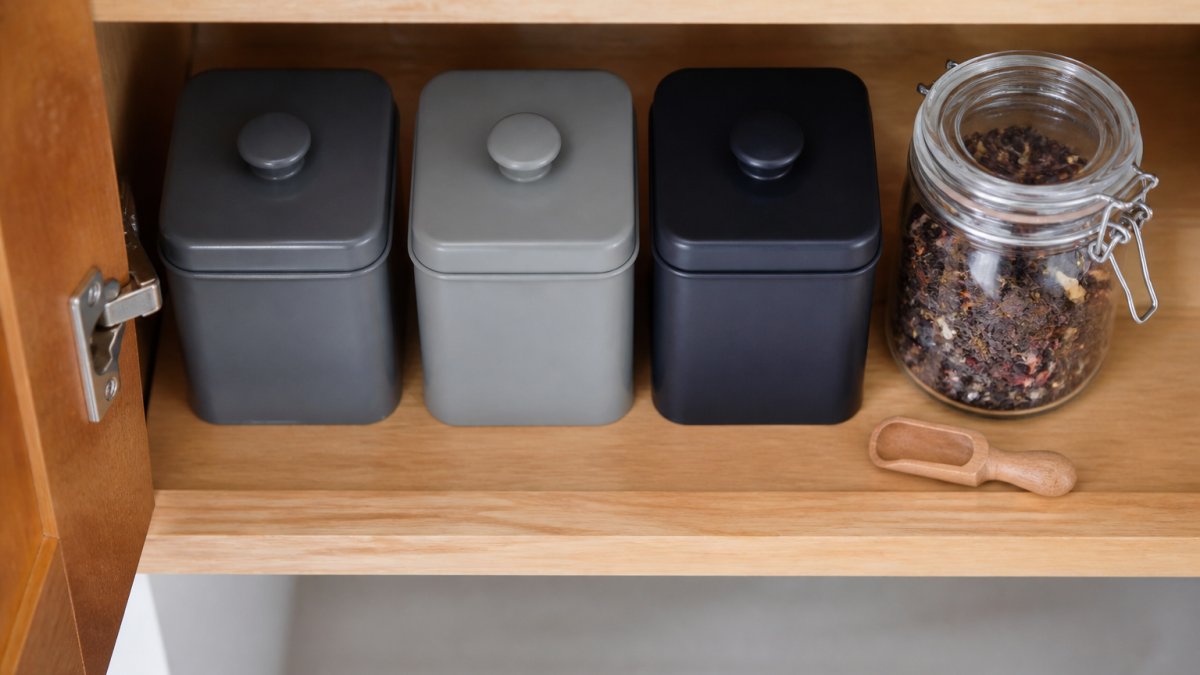
Airtight Tins and Opaque Canisters
Look for these features:
- A tight seal that locks out air
- An opaque body that blocks light
- A small size that matches how fast you drink
- A material that does not hold odors, like stainless steel or ceramic
Small matters more than people think. Every time you open a big tin, fresh air hits all the leaves inside.
Containers to Skip
Some containers work against you:
- Clear glass jars on a sunny counter
- Open bags clipped shut, which still let air in
- Decorative tins with loose lids
- Any container that once held spices or coffee
If you love a clear jar for display, keep it in a dark cabinet, not on the counter.
That covers the gear. Now here is the routine.
Step-by-Step: How to Store Tea Leaves Properly
Learning how to store tea leaves properly takes about five minutes once you have the right containers. Follow these steps in order.
- Pick a cool, dark, dry cabinet away from the stove and sink.
- Choose small, opaque, airtight tins for each tea you own.
- Keep one tea per container so flavors do not mix.
- Fill each tin, then press out as much air as you can before sealing.
- Store the tins side by side, away from coffee and spices.
- Reseal the tin fully every time you scoop.
Expected result: leaves that smell bright and fresh each time you open the tin.
Label Each Container With Type and Date
Write the tea type and the date you opened it on every tin. A strip of tape and a marker works fine.
Why bother? Because you will forget. Two months later, you will not remember which tin holds the oolong you opened in spring.
| What to Write | Why It Helps | Example |
|---|---|---|
| Tea type | Avoids flavor mix-ups | Hojicha |
| Date opened | Tells you when to finish it | Opened 10/8 |
| Source | Tracks which batch you liked | theITDGroup LLC |
Labels take ten seconds and save you from stale surprises.
How Long Does Loose Leaf Tea Last?
Loose leaf tea lasts about six months to a year when stored well, though the exact time depends on the type. Black and roasted teas hold up longest. Green and white teas fade faster.
Here is a simple guide:
- Black tea: up to a year or more
- Green tea: a few months at peak flavor
- Matcha: weeks to a couple of months once opened
- Herbal blends: around six months to a year
Buy in amounts you will actually drink. A big bag of green tea sounds like a deal until it sits for eight months.

Tea Storage Mistakes That Cost You Flavor
The most common tea storage mistakes all come down to exposure. Each one quietly steals flavor you paid for.
Watch for these:
- Storing tea in clear jars on open shelves
- Keeping tea near coffee, spices, or the stove
- Using one big container for several teas
- Leaving the bag open between scoops
- Buying more tea than you can drink in a few months
- Putting tea in the fridge, where moisture and odors collect
The fridge mistake trips up a lot of people. Cold does not help dry leaves, and the damp air inside does real harm.
Fix these habits and your tea will taste better within a week.
Storing Different Teas: Matcha, Earl Grey, Mint, and Hojicha
Different teas need slightly different care, mostly because of how delicate they are.
Matcha is a fine powder, so it reacts to air and light faster than loose leaves. Keep it sealed tight in a dark tin, and use it within a few weeks of opening. Our Matcha is milled for traditional preparation, so it rewards careful storage.
Earl Grey carries bergamot oil, which fades with heat and air. An airtight tin protects that citrus note. Our Earl Grey blends Ceylon black tea with bergamot and cornflowers, and it keeps best sealed and cool.

Moroccan Mint mixes green tea with mint, so it is sensitive to both light and moisture. Keep it dark and dry. Our Moroccan Mint stays vibrant hot or iced when stored well.

Hojicha is roasted, which makes it one of the sturdier options. It still needs an airtight tin, but it holds its toasted notes longer than green tea. Our Hojicha brews smooth with notes of toasted cereal.
A good rule: the finer and greener the tea, the faster it fades.
That is why we roast and pack with freshness in mind at theITDGroup LLC, so your leaves arrive ready to store well from day one.
Conclusion: Build a Storage Routine That Protects Every Batch
Stale tea is a slow, quiet problem. It never announces itself. One day your favorite cup just tastes flat, and the cause was a clear jar on a sunny shelf weeks earlier.
At theITDGroup LLC, we source and pack teas with freshness in mind, so the leaves you order arrive ready to store well. Our roasted-to-order batches and reliable delivery make it easy to keep every cup tasting its best.
Find your perfect roast and start protecting every batch today.
Frequently Asked Questions
What is the best way to store loose leaf tea?
Keep loose leaf tea in an airtight, opaque container stored in a cool, dark cabinet away from the stove, sink, and windows. Glass jars look good on a shelf but let light through, which fades color and aroma over time. A tin with a tight double lid works well for daily use, and you can keep a larger resealable bag in the pantry for refills. Buy only as much as you will drink in a few months so each batch reaches your cup near peak flavor.
Can tea leaves be stored in the refrigerator or freezer?
The refrigerator is a poor choice for daily-use tea because every time you open the container, warm air meets cold leaves and condensation forms. Moisture is one of the fastest ways to ruin dry tea. A freezer can work for long-term storage if the tea is vacuum sealed and never opened until it reaches room temperature, but repeated thawing and refreezing degrades quality. For most home setups, a cool pantry shelf beats both appliances.
How can you tell if tea leaves have gone bad?
Stale tea usually looks dull rather than vibrant, smells flat or like hay instead of its original aroma, and brews a thin, lifeless cup. If you notice a musty or cardboard-like scent, moisture has likely gotten in and the batch should be replaced. Matcha and other powdered teas fade fastest because more surface area is exposed to air, so check them first. When in doubt, brew a small cup and compare it to your memory of the first pour.
Should different types of tea be stored differently?
Yes. Flavored blends like Earl Grey and Moroccan Mint should be kept in separate containers so bergamot and mint oils do not migrate into plain teas. Matcha and Hojicha, both fine powders, absorb oxygen quickly and benefit from the smallest container that fits, ideally one you open briefly. Traditional green and black loose leaves are more forgiving but still need an airtight seal. Labeling each tin with the tea type and the date you opened it makes rotation simple.