

How to Read Coffee Tasting Notes: A 2026 Guide
Table of Contents
- What Coffee Tasting Notes Actually Mean on a Bag
- How Coffee Tasting Notes Are Determined Before They Reach Your Bag
- Coffee Cupping for Beginners: A Repeatable Tasting Exercise
- A Practical Coffee Flavor Wheel Walkthrough
- Coffee Tasting Notes Examples You Can Calibrate Against
- Troubleshooting When You Can't Detect the Notes
- Conclusion: Turn Every Bag Into a Tasting Lesson
- Frequently Asked Questions
Last Updated: October 15, 2026
What Coffee Tasting Notes Actually Mean on a Bag
Learning how to read coffee tasting notes starts with one key fact: those words describe what the coffee tastes like, not what was added.
At theITDGroup LLC, we print tasting profiles for this reason: they help you pick a roast you'll actually enjoy. Our Ethiopia Natural, for example, lists milk chocolate, fruity, and caramel, notes from the Sidama zone, not a flavoring bottle.

Why Tasting Notes Are Not Added Flavors
Coffee is an agricultural product, like wine or apples.
A natural process coffee dries inside the whole cherry. That contact with fruit sugars pushes berry and wine-like flavors into the bean.
Roast level changes the picture again. Lighter roasts keep more of the bean's original acids and fruit.
So when a bag says "dried orange, berry, chocolate," the taster found those flavors in the cup.
How Coffee Tasting Notes Are Determined Before They Reach Your Bag
Roasters determine tasting notes through cupping, a standardized tasting method where small batches are brewed, slurped, and scored for flavor. The Specialty Coffee Association cupping standards define how this works: consistent grind, water temperature, and ratio so every lot gets a fair read.
A roaster cups a sample, writes down what they taste, then cups again after roasting to confirm before the bag gets its label.
Roast Level, Origin, and Processing Method
Three variables do most of the work:
- Origin: Soil, altitude, and climate shape the bean's baseline. High-grown beans typically develop more acidity and complexity.
- Processing method: Washed coffees taste clean and bright. Natural coffees taste fruity and heavy. Wet-hulled coffees, common in Indonesia, taste earthy and full.
- Roast level: Light roasts highlight fruit and acidity. Medium roasts balance sweetness and body. Dark roasts lead with chocolate, caramel, and smoke.
Our Kenya, for instance, is fully washed and dried on raised beds. That process protects the bright acidity and citrus the region is known for.

Coffee Cupping for Beginners: A Repeatable Tasting Exercise
Coffee cupping for beginners doesn't require a lab. It requires three cups, hot water, a spoon, and ten minutes of attention.
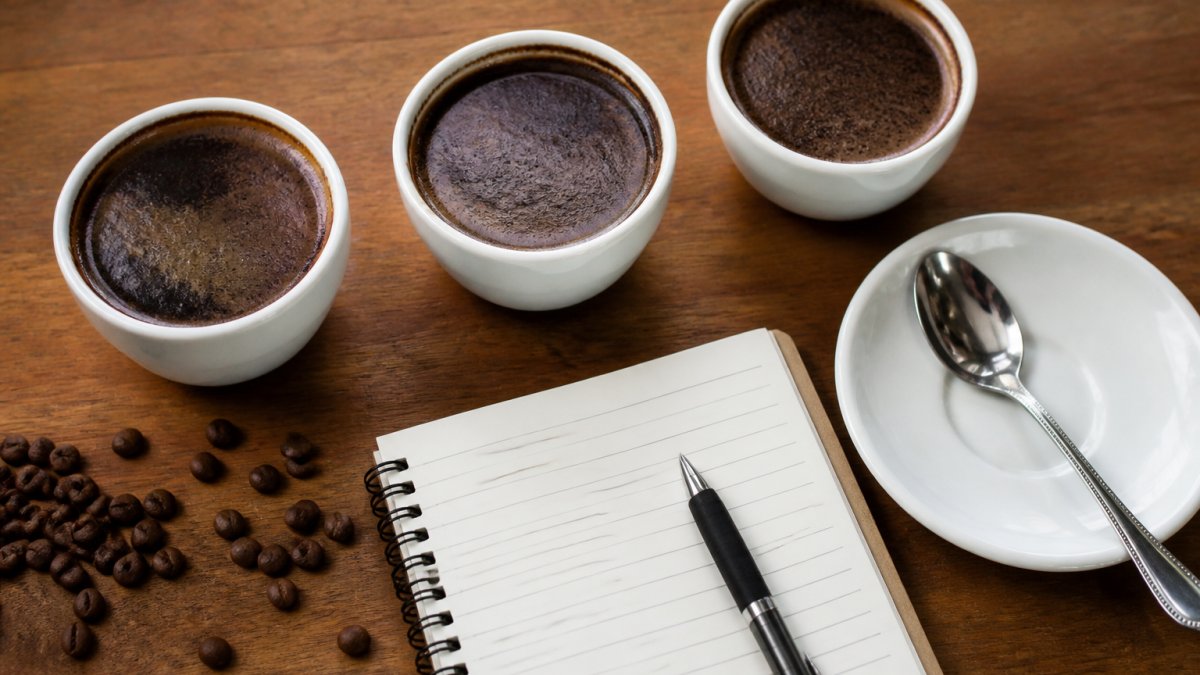
Do this once a week with a different coffee; repeatability builds your palate.
What You'll Need and How to Set Up
- Three identical cups or small bowls
- A kitchen scale
- A grinder set to a coarse grind
Steps:
- Weigh 8 grams of coffee into each cup.
- Pour hot water over the grounds and start a timer.
- At 4 minutes, break the crust with your spoon and smell the wet aroma.
- Skim off the floating grounds.
- Let it cool for several minutes, then slurp from the spoon.
- Write down the first three words that come to mind.
A Practical Coffee Flavor Wheel Walkthrough
The coffee flavor wheel organizes descriptors into families, from broad categories at the center to specific notes at the outer ring. Think of it as a vocabulary builder and decision tree, not a rulebook.
How to Move From Broad to Specific
Work the wheel in three passes, not one:
- Family pass. Take a sip and pick one of the seven broad families: fruity, floral, sweet, nutty/cocoa, spices, roasted, or earthy. If nothing jumps out, default to sweet or nutty/cocoa, the most common in medium and dark roasts.
- Sub-family pass. Within your family, narrow once. Fruity becomes citrus, berry, dried fruit, or tropical. Sweet becomes caramel, honey, brown sugar, or molasses. Nutty/cocoa becomes almond, hazelnut, milk chocolate, or dark chocolate.
- Specific pass. Only now reach for the outer ring. Citrus becomes lemon, orange, or grapefruit. Berry becomes blueberry, strawberry, or blackberry. If the specific note doesn't arrive, stop at the sub-family. "Dried fruit" is a complete, correct tasting note.
The practical move: pick the family first, then narrow it down. "Fruity" is easier than "blackberry" on day one, and with practice the specific note arrives on its own.
Calibrate Each Descriptor Against a Food You Already Know
The wheel only works if the words mean something in your mouth. Professional tasters calibrate by tasting reference foods alongside the coffee. You can do the same with a grocery run:
| Wheel Descriptor | Reference Food to Taste Alongside |
|---|---|
| Citrus | A slice of lemon or a segment of orange |
| Berry | A few frozen or fresh blueberries |
| Dried fruit | A dried apricot or raisin |
| Stone fruit | A slice of peach or plum |
| Caramel | A soft caramel candy |
| Honey | A spoon of clover honey |
| Molasses | A dab of unsulphured molasses |
| Milk chocolate | A square of milk chocolate |
| Dark chocolate | A square of 70% cacao chocolate |
| Nutty | A toasted almond or hazelnut |
| Floral | A sniff of jasmine tea or a rose petal |
| Spice | A pinch of ground cinnamon or clove |
Take a sip of coffee, then a bite of the reference food, then another sip. Your brain links the two within a session or two, the fastest way to move from "this tastes like coffee" to "this tastes like dried orange."
A Worked Example
Say you're cupping a medium roast and the bag lists "dried orange, berry, chocolate." Here's how the wheel breaks that down:
- Dried orange sits in fruity → citrus → orange, with the "dried" qualifier pointing to the sweet, concentrated edge of the fruit rather than fresh juice.
- Berry sits in fruity → berry, and on a natural-process coffee it often reads as blueberry or strawberry.
- Chocolate sits in nutty/cocoa → cocoa → milk or dark chocolate, depending on roast level.
A single coffee spanning three families is normal, good coffee rarely fits one box. The wheel isn't there to force one answer; it gives you a route from a vague impression to a word you can write down and compare next week.
Coffee Tasting Notes Examples You Can Calibrate Against
Calibration means matching a flavor in your cup to one you already know, how professional tasters build accuracy, and something you can do at home.
Try this side-by-side comparison:
| Coffee | Listed Notes | What to Compare It To |
|---|---|---|
| Ethiopia Natural | Milk chocolate, fruity, caramel | A square of milk chocolate and a handful of dried berries |
| Colombia | Dried orange, berry, chocolate | Orange peel and dark chocolate chips |
| Kenya | Bright acidity, orange, lemon, floral | Fresh lemon zest and a spoon of orange juice |
| Bali Blue | Dark chocolate, molasses, brown sugar | A spoon of molasses and dark cocoa powder |
Buy a small amount of each, cup them in one sitting, and taste the reference foods alongside.

Troubleshooting When You Can't Detect the Notes
If you can't taste the notes on the bag, the problem is usually technique, temperature, freshness, or palate fatigue, not your palate. Work through this sequence in order; each step isolates one variable so you can tell a brewing issue apart from a genuinely subtle flavor.
Step 1: Check Temperature
Flavors separate as coffee cools. At 200°F you mostly taste heat and bitterness; wait until the cup is around 140°F and the fruit and sweetness show up. A common pattern is that the first sip tastes harsh and the tenth tastes sweet, that's your palate and the temperature catching up, not the coffee changing.
Step 2: Check Grind and Ratio
Too fine and the cup turns bitter and drying; too coarse and it tastes thin and sour. Match the grind to your brew method and adjust one notch at a time. For drip, weigh your coffee, a common starting ratio is 1 gram of coffee to 16 grams of water. If the cup tastes hollow, tighten the ratio before blaming the beans.
Step 3: Check Freshness
Oxygen kills aroma fast. Whole beans stored in a sealed container away from light hold their flavor far longer than pre-ground. Peak flavor for most roasted coffee lands between a few days and a few weeks off roast, then degrades noticeably. If the bag has no roast date, that's a signal, you can't troubleshoot freshness you can't measure.
Step 4: Rule Out Palate Fatigue
This is the step most guides skip. Your ability to detect subtle notes drops fast when you cup several coffees back to back, or taste right after a strong meal, coffee, or toothpaste. Reset by:
- Sniffing your own clean skin or the inside of your elbow between sips.
- Taking a plain water rinse and a short break of two to three minutes.
- Tasting in the morning, before your first cup of the day, when your palate is freshest.
If notes still won't show up after a reset, they may genuinely be subtle. Some washed, light-roast coffees present delicate florals and citrus that take weeks of practice to catch. That's not a defect, it's a difficulty setting.
Step 5: Separate "Can't Taste It" From "Don't Like It"
Tasting notes describe the coffee, not your preference. You can taste "berry" clearly and still prefer a dark, chocolatey roast, that's information, not failure. Beginners assume notes should be loud; in practice most are quiet and require attention. Identifying a flavor and enjoying it are separate skills, and you can build the first without changing the second.
A Quick Diagnostic Checklist
Run this before you conclude the notes are wrong:
- Cup is between 130°F and 150°F, not scalding
- Grind matches the brew method
- Coffee-to-water ratio is measured, not eyeballed
If all six boxes are checked and the notes still don't land, the coffee may simply be a subtle one. Note that in your log and revisit it in a week, palates change, and a coffee that read as "just coffee" on day one often opens up on day ten.
Conclusion: Turn Every Bag Into a Tasting Lesson
Reading coffee tasting notes is a skill, and like any skill it rewards repetition. Cup one coffee a week, compare it against a reference food, and write down three words each time. Within a month, labels stop looking like decoration and start reading like directions.
The harder challenge is finding beans fresh enough to show their notes at all.
Find your perfect roast and taste the difference freshness makes.
Frequently Asked Questions
Do coffee tasting notes mean that flavor was added to the coffee?
No. Coffee tasting notes describe flavors that develop naturally during growing, processing, and roasting. A note of milk chocolate or dried orange comes from compounds created in the bean itself, not from syrups or additives. When a bag lists caramel or berry, it is telling you what the roaster tasted in that specific lot, which is shaped by origin, variety, processing method, and roast level. Flavored coffee is a separate product that lists added ingredients on the label.
How can I learn to taste notes in coffee if I'm new to it?
Start with a repeatable exercise: brew the same coffee three ways, or taste two different single-origin coffees side by side, and write down what you notice before reading the bag. Slurp the coffee so it spreads across your palate, pay attention to aroma, acidity, body, and aftertaste, then compare your notes to the roaster's description. Calibrating against familiar foods like dark chocolate, lemon, or toasted nuts trains your palate faster than drinking coffee passively.
What are the five elements of tasting coffee?
The five elements are aroma, flavor, acidity, body, and aftertaste. Aroma covers both the dry grounds and the wet aroma after brewing. Flavor is what you taste on the palate, from sweetness to bitterness. Acidity describes brightness, such as the citrus-like snap in a Kenyan coffee. Body is the mouthfeel, ranging from light and tea-like to heavy and syrupy. Aftertaste, or finish, is how long the flavor lingers once you swallow.
How should I use coffee tasting notes to choose beans I'll actually enjoy?
Treat tasting notes as a map, not a guarantee. If you like chocolate and caramel notes, look for medium to medium-dark roasts from Brazil, Colombia, or Bali. If you prefer bright, fruity cups, try a light-roasted Ethiopia Natural with its milk chocolate, fruity, and caramel profile, or a Kenya with bright acidity, orange, lemon, and floral notes. Buy small amounts first, keep notes on what you liked, and let your own preference, not the label, guide repeat purchases.