

How to Identify Ethically Sourced Coffee
Table of Contents
- What Makes Coffee Ethically Sourced
- Check for Third-Party Certifications and Labels
- Fair Trade vs Direct Trade Coffee: Understanding the Difference
- What Are Single Origin Coffee Beans and Why They Matter
- How to Read Coffee Labels for Sustainability
- Verify Supply Chain Transparency and Farmer Compensation
- Ask Questions Before You Buy
- Frequently Asked Questions
Last Updated: October 2, 2026
What Makes Coffee Ethically Sourced
Ethically sourced coffee means the beans are grown and harvested with fair treatment of farmers, respect for the environment, and transparent business practices throughout the supply chain.
The core elements of ethically sourced coffee include:
- Farmers receive fair compensation for their work
- Working conditions meet basic safety and dignity standards
- Environmental practices protect soil, water, and biodiversity
- Supply chain transparency allows traceability from farm to roaster
- Community investment supports long-term farm sustainability
At theITDGroup LLC, we prioritize sourcing from farms that meet these standards. Our carefully sourced beans come from trusted farms around the world.
"Ethical" can mean different things: some certifications focus on environmental impact, others on farmer wages, and a few address all three.
Check for Third-Party Certifications and Labels
Third-party certifications provide independent verification that coffee meets specific ethical standards and offer a reliable starting point when evaluating beans.
Look for these labels on coffee packaging:
Fair Trade Certification
Fair Trade certification guarantees that farmers received a minimum price for their beans, regardless of market fluctuations. This price floor protects farmers from devastating losses when global coffee prices collapse.
Fair Trade also requires democratic cooperatives, community investment, prohibition of child labor, and environmental standards. The label guarantees farmers earned at least a baseline wage, though certification costs mean smaller farms sometimes skip it despite solid practices.
Rainforest Alliance and Organic Labels
Rainforest Alliance certification focuses on environmental sustainability and worker welfare, requiring farms to protect forests and reduce chemical use.
Other certifications include Bird Friendly (shade-grown, protects bird habitats), UTZ Certified (sustainable farming and worker rights), and Smithsonian Bird Friendly (strict environmental standards). Multiple certifications suggest the producer invests in verification across multiple dimensions.
Fair Trade vs Direct Trade Coffee: Understanding the Difference
Fair Trade and direct trade are two different approaches to ethical sourcing with distinct verification mechanisms and trade-offs. Understanding the difference helps you identify when "direct trade" claims are marketing rather than substance.
How Fair Trade Works
Fair Trade uses independently verified minimum prices (typically $1.40-$2.00 per pound), protecting farmers against price collapse. Specialty-grade beans earn additional premiums, and $0.20 per pound goes to farmer cooperatives for community projects.
Verification: Fair Trade requires independent audits with annual renewal and public audit reports. Trade-offs: Fair Trade organizations take 3-5% for administration, and certification costs mean smaller farms sometimes skip it despite solid practices.
How Direct Trade Works
Direct trade eliminates the middleman, with roasters buying directly from farmers at negotiated prices ($2.50-$4.00+ per pound). No certification overhead means savings flow to farmers, and long-term agreements provide income stability.
The critical limitation: Direct trade has no official certification, regulatory body, or third-party verification system. There is no "Direct Trade" seal issued by an independent organization. The term is entirely unregulated.
Why Unregulated Direct Trade Matters
Because direct trade is unregulated, you rely entirely on roaster integrity. Risks include greenwashing without verification, no wage verification, inconsistent standards across roasters, and use as a marketing gimmick to justify premiums without actually paying farmers more.
How to Evaluate Direct Trade Claims
If a roaster claims direct trade, ask for: farm name and location (searchable independently), specific pricing per pound (compare to Fair Trade minimums of $1.40-$2.00), farm visit frequency (annual visits suggest real relationships), multi-year purchasing commitments, and whether they've undergone third-party audits.
Direct Trade vs Fair Trade: Which Should You Choose?
Both models can deliver ethical sourcing, but they have different strengths:
Choose Fair Trade for independent verification and guaranteed minimums. Choose Direct Trade if the roaster provides specific farm names, pricing, and verifiable details. Many specialty roasters use both models, selecting based on which approach best serves each farming community.
Red Flags for Direct Trade Greenwashing
Red flags include: no farm names provided, vague pricing claims, no farm visit evidence, premium pricing without justification, inconsistent sourcing, and evasiveness when questioned. Real direct trade comes with verifiable details.
What Are Single Origin Coffee Beans and Why They Matter
Single origin coffee beans come from one specific farm, region, or country. They enable traceability, you can verify the specific farm's practices, and offer distinct flavor characteristics based on altitude, soil, and climate.
When evaluating single origin beans, look for specific farm names, farmer/cooperative information, certifications, and sourcing details. theITDGroup LLC roasts single origin beans to order, preserving unique characteristics.
How to Read Coffee Labels for Sustainability
Coffee labels contain valuable information: origin, roast date, certifications, and sometimes farmer names and processing details.
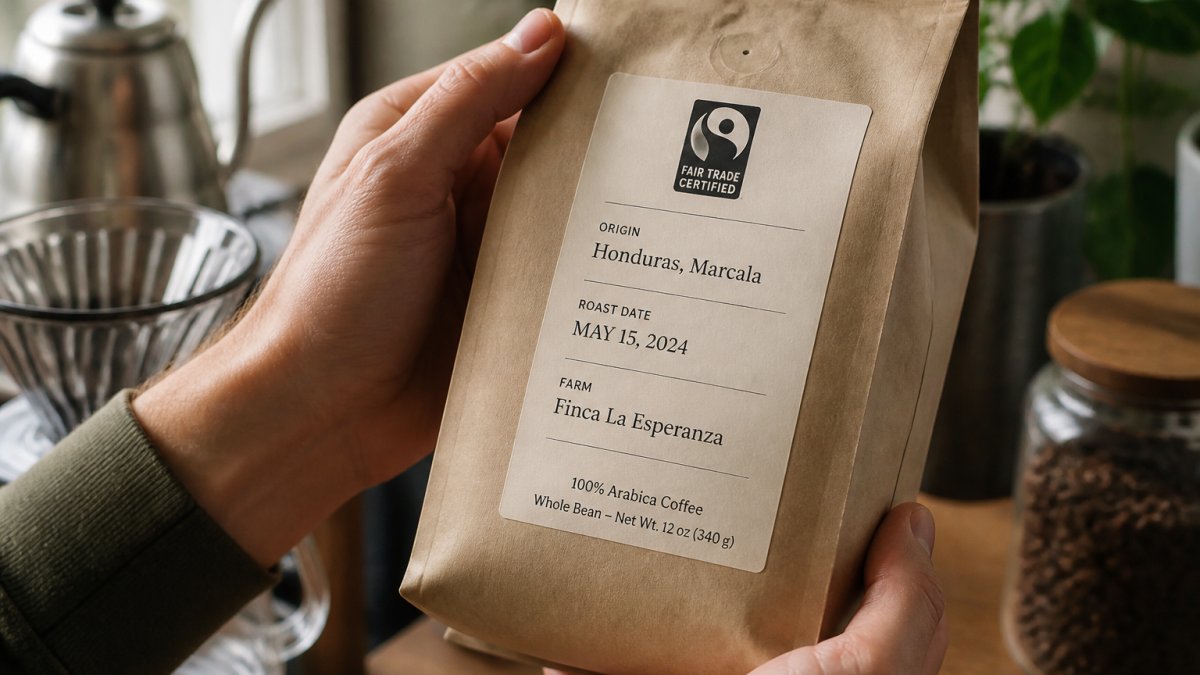
Here's what to prioritize when reading a label:
Roast Date: Look for roast dates within 30 days; no date is a red flag. Origin: Specific regions ("Ethiopian Yirgacheffe, Gedeo Zone") indicate traceability. Certifications: Multiple certifications suggest ethics across dimensions. Processing Method: "Washed," "natural," or "honey processed" affect flavor and environmental impact. Farmer/Cooperative Name: Naming the source signals confidence and transparency.
Identifying Greenwashing Red Flags
Greenwashing red flags include: "ethically sourced" with no details, "sustainably grown" without explanation, no roast date, no origin information, premium pricing without justification, and vague sourcing claims. Real ethical sourcing comes with specific details.
Verify Supply Chain Transparency and Farmer Compensation
You can verify ethical claims by asking roasters direct questions and using verification tools. Legitimate roasters welcome these questions and provide specifics you can cross-check independently.
Questions to Ask Your Roaster
Ask roasters for: specific farm or cooperative names, pricing per pound (Fair Trade minimums are $1.40-$2.00; ethical direct trade often $2.50-$4.00+), verification methods (farm visits, audits), percentage reaching farmers, relationship duration, and how they verify direct trade claims without third-party oversight.
Independent Verification Tools
You don't have to rely solely on roaster claims. Several databases and tools let you verify farm IDs, cooperatives, and certification status:
Fair Trade Certification Lookup: The Fair Trade USA website maintains a searchable directory of certified farms and cooperatives. You can enter a farm name or cooperative ID to confirm current certification status, expiration dates, and audit history. This is the most reliable verification tool for Fair Trade claims.
Rainforest Alliance Directory: Rainforest Alliance publishes a searchable list of certified farms and producers.
Organic Certification Databases: The USDA maintains records of certified organic operations.
Direct Trade Verification: Since direct trade is unregulated, there's no single database.
Cooperative Websites and Social Media: Many coffee cooperatives maintain websites or social media pages listing member farms and production details.
Understanding the Unit Economics of Ethical Pricing
When you pay a premium for ethically sourced coffee, understanding where that money goes helps you evaluate whether the premium is justified.
A typical bag of specialty coffee retails for $12-$18 per pound. Here's a simplified breakdown of how that dollar is distributed:
Farmer compensation: $2.50-$4.00 per pound (for ethical sourcing). This is the starting point. Fair Trade guarantees a minimum of around $1.40, but ethical direct trade often exceeds this. The farmer's share is typically 20-35% of the retail price.
Importer and exporter fees: $1.00-$2.00 per pound. This covers export logistics, quality control, shipping to the roaster's country, and importer margins.
Roasting, packaging, and overhead: $2.00-$4.00 per pound. The roaster's costs include equipment, labor, facility rent, quality control, and packaging materials.
Retail markup and shipping: $4.00-$8.00 per pound.
Traceability as a Verification Signal
The most reliable ethical sourcing indicator is traceability, the ability to follow beans from a specific farm back through the supply chain. Roasters serious about ethics provide:
- Lot numbers or batch codes on packaging that correspond to specific harvest dates and farms
- Farmer or cooperative names printed on the bag (not just the region)
- Harvest dates that allow you to verify freshness and cross-check with farm records
- Processing method and altitude details that match public information about that farm
If a roaster can provide a farm name and you can verify it in a certification database or cooperative directory, you've confirmed the claim is traceable.
Transparency matters because it shows the roaster has done the work. A roaster who can't answer these questions, won't provide farm names, or deflects with vague language either doesn't know their sources or doesn't want scrutiny.
Ask Questions Before You Buy
Don't rely only on labels and websites. Ask roasters directly about their sourcing before making a purchase.
Good questions to ask:
- "Where do these beans come from?" (Expect a specific farm or region, not just a country)
- "How do you verify ethical sourcing?" (Look for specific certifications or direct farm visits)
- "What price do farmers receive?" (They should have this information)
- "Can you tell me about the farmer or cooperative?" (Willingness to share shows confidence)
- "How fresh are these beans?" (Should be roasted within the last month)
- "Do you have a satisfaction guarantee?" (Ethical roasters stand behind their product)
If a roaster is evasive or can't answer these questions, that's a signal to buy elsewhere.
Many specialty roasters provide tasting notes and origin stories on their websites. theITDGroup LLC includes detailed information about our sourcing practices and roast dates with every order.
Frequently Asked Questions
What certifications should I look for to identify ethically sourced coffee?
Look for Fair Trade Certified, Rainforest Alliance Certified, and USDA Organic labels on the bag. Fair Trade guarantees farmers receive fair compensation and work in safe conditions. Rainforest Alliance focuses on environmental sustainability and biodiversity. Organic certification confirms beans were grown without synthetic pesticides. Single origin coffees often include traceability information showing the specific farm or cooperative. Check the roaster's website for additional supply chain transparency and third-party audit reports.
What is the difference between Fair Trade and direct trade coffee?
Fair Trade uses third-party certification to ensure farmers meet minimum wage standards and work conditions through cooperative structures. Direct trade removes the middleman, allowing roasters to buy directly from farms at negotiated prices, often higher than Fair Trade minimums. Direct trade offers greater traceability and relationship-building between roaster and farmer, but lacks independent verification. Fair Trade provides standardized protections across suppliers. Both approaches aim to improve farmer livelihoods, but direct trade emphasizes transparency and personal relationships while Fair Trade emphasizes standardized compliance.
How can I tell if a coffee brand is truly transparent about its supply chain?
Legitimate ethical brands provide specific information: farm names, cooperative details, harvest dates, and roast dates. Check if they publish supply chain audits, farmer payment reports, or sustainability impact statements on their website. Ask the roaster directly about their sourcing practices and farmer relationships. Transparent roasters share origin-specific stories, farmer photos, and harvest conditions. Be skeptical of vague language like 'ethically sourced' without supporting details. Reputable brands often link to third-party certification documents and provide traceability codes you can verify.
What are single origin coffee beans and why do they matter for ethical sourcing?
Single origin coffee comes from one specific country, region, or farm rather than a blend of beans from multiple sources. Single origin beans matter for ethical sourcing because they provide complete traceability from the exact farm to your cup, making it easier to verify fair wages, working conditions, and environmental practices. You can research the specific region's labor standards and sustainability practices. Blended coffees mix beans from multiple origins, making it harder to track individual farmer compensation or environmental impact. Single origin coffees also showcase unique flavor profiles tied to their terroir, supporting specialty coffee markets that typically pay farmers higher prices.
Identifying ethically sourced coffee requires attention to certifications, transparency, and traceability. The best approach combines label reading with direct questions to roasters about their sourcing practices. When you buy from a roaster committed to ethical sourcing, like theITDGroup LLC, you support farmers fairly and enjoy superior flavor from beans roasted fresh to order. Find your perfect roast by choosing coffee backed by verifiable ethical practices.