

Berks Beans Alternative for Tea Lovers: 2026 Guide
Table of Contents
- Why Coffee Drinkers Are Turning to Tea
- What Makes a Berks Beans Alternative for Tea Lovers
- Caffeine Content Comparison: Coffee vs Tea
- Sensory Mapping: Mouthfeel and Flavor Profiles for Coffee Palates
- Best Tea Subscription Services and Loose Leaf Options
- How to Transition from Coffee to Tea
- Equipment Compatibility for Coffee Lovers
- Frequently Asked Questions
Last Updated: September 30, 2026
Why Coffee Drinkers Are Turning to Tea
Coffee drinkers are turning to tea because it delivers the ritual and warmth of a morning cup without the sharp energy crash that follows a heavy caffeine dose. A berks beans alternative for tea lovers is any tea, blend, or subscription that matches the body, aroma, and comfort a coffee habit provides.
The Ritual Without the Crash
Coffee delivers a fast rise and a fast fall. Tea releases caffeine more gradually, and the amino acid L-theanine appears to smooth how the body responds to it. That combination is why many drinkers describe tea energy as steady rather than sharp. You still get a warm cup, a familiar pause, and a reason to step away from the screen.
What Makes a Berks Beans Alternative for Tea Lovers
A good berks beans alternative for tea lovers has three traits: comparable body, real flavor complexity, and a brewing routine that feels as deliberate as grinding beans. The USDA food composition data on tea and caffeine confirms that brewed tea contains caffeine, so it is a genuine substitute rather than a caffeine-free placeholder.
Caffeine Content Comparison: Coffee vs Tea
Tea generally contains less caffeine per cup than coffee, and the gap is wide enough to matter. An 8-ounce cup of brewed coffee typically lands in the 95-165 mg range, while the same volume of black tea usually falls between 25-48 mg. Green tea runs lower still, and herbal infusions like mint or chamomile contain none at all.
| Drink (8 oz) | Typical Caffeine | Body | Best For |
|---|---|---|---|
| Brewed coffee | 95-165 mg | Heavy | Fast morning lift |
| Black tea | 25-48 mg | Medium-full | All-day sipping |
| Green tea | 20-45 mg | Light-medium | Afternoon focus |
| Matcha | 60-70 mg | Rich, creamy | Sustained energy |
| Herbal infusion | 0 mg | Varies | Evenings |
Sensory Mapping: Mouthfeel and Flavor Profiles for Coffee Palates
Sensory mapping means translating what you already love in coffee into tea terms. If you drink dark roasts for the bitterness and weight, you want high-tannin black teas. If you prefer medium roasts with sweetness, you want malty or honeyed blends. If you drink espresso for intensity, masala chai or a strong English Breakfast will feel familiar.
Best Tea Subscription Services and Loose Leaf Options
The best tea subscription services and loose leaf options give you fresh, single-origin leaves with clear tasting notes, the same way a good roaster labels a bean. Loose leaf beats bags because whole leaves steep evenly and hold their aroma longer.
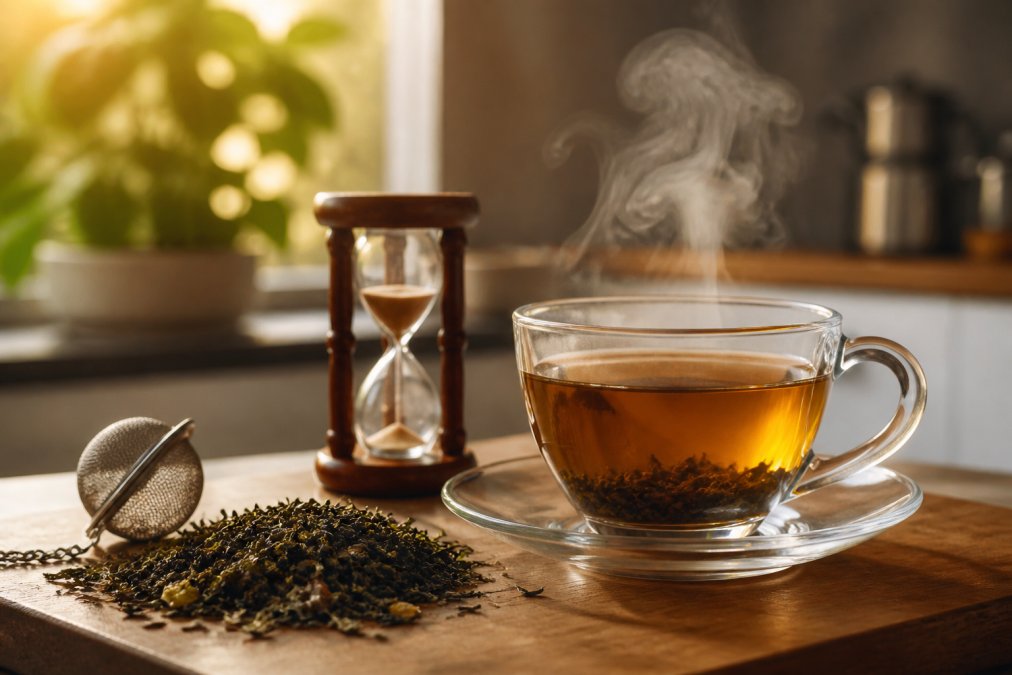
Earl Grey: The Bold, Citrus-Forward Bridge
Earl Grey blends Ceylon black tea with bergamot essential oil and blue cornflowers. Its notes of orange, floral, and malt, with high astringency and high body, make it the closest thing to a bright, complex coffee. Brew 2.5 g per 12 oz at 195 F for 5-10 minutes. It works alone or with milk and sugar.

English Breakfast: A Malty, Full-Bodied Classic
English Breakfast is a blend of African and Indian tea built to stand up to milk and sugar. It is rustic and sweet, not complicated. If you take your coffee with cream, start here.
Masala Chai: Spiced and Intense
Masala Chai brings full-bodied, aromatic, intense character. It shines as a traditional chai with milk and sugar, and it holds its own black. The spice profile reads as bold to a coffee palate.
Moroccan Mint and Jasmine: Lighter, Refreshing Alternatives
Moroccan Mint pairs green tea with fresh mint, refreshing hot and especially good iced. Jasmine is medium-bodied, sweet, and silky, with fruity notes on a green tea base, and it holds up to multiple steepings. These suit drinkers ready to step down in intensity.


How to Transition from Coffee to Tea
Transitioning works best in stages rather than cold turkey. The FDA guidance on caffeine and how much is too much notes that caffeine affects people differently, so pace your switch to your own tolerance. The goal is not to quit coffee overnight. The goal is to keep the ritual while lowering the dose, so your body barely notices the change.
A Tapering Schedule That Respects Caffeine Withdrawal
Caffeine withdrawal is real and predictable. Most people who cut coffee abruptly report headaches, fatigue, irritability, and difficulty concentrating within 12 to 24 hours, peaking around 20 to 48 hours and fading over two to nine days. A structured taper avoids the worst of it. Here is a four-week schedule built around total daily caffeine, not cups.
| Week | Morning | Afternoon | Approx. Daily Caffeine |
|---|---|---|---|
| 1 | Full coffee | Swap to black tea | 120-190 mg |
| 2 | Full coffee | Black tea or matcha | 120-190 mg |
| 3 | Half-caf coffee, then tea | Tea | 70-120 mg |
| 4 | Strong black tea or chai | Tea or herbal | 25-70 mg |
Managing the Withdrawal Window
Expect a mild adjustment period. Headaches and sluggishness are common when you cut caffeine quickly, so taper instead of stopping. A few practical moves help:
- Hydrate aggressively. Caffeine is a mild diuretic, and dehydration worsens withdrawal headaches. Aim for a glass of water with every cup of tea.
- Do not skip breakfast. Low blood sugar amplifies the fatigue and irritability of a caffeine drop.
- Keep one anchor cup. Most people find it easier to keep a single morning coffee for the first two weeks and switch everything after it to tea.
- Use matcha as a bridge. Matcha delivers 60-70 mg of caffeine per 8 ounces with the full leaf's L-theanine, so it feels closer to coffee than a light green tea while still stepping you down.
- Time your taper. Start on a low-stakes week, not the week of a deadline or a big presentation.
What to Do If You Get a Headache Anyway
A withdrawal headache usually responds to a small dose of caffeine, not a full cup. A half-cup of coffee or a strong black tea will often stop the headache within 30 minutes while keeping your taper on track. If headaches persist past the first week, slow the schedule rather than pushing through. There is no prize for suffering, and a slower taper is more likely to stick.
The Ritual Swap
The physical taper is only half the transition. Coffee drinkers miss the ceremony as much as the caffeine. Keep the same trigger, the same mug, and the same time of day, and change only what is in the cup. If you ground beans every morning, weigh your tea leaves on the same scale. If you lingered over a pour-over, linger over a gaiwan or a French press of tea.
Equipment Compatibility for Coffee Lovers
Most of your coffee gear already works for tea, which lowers the barrier to switching. The trick is knowing which pieces translate cleanly, which need a dedicated version, and which will ruin a cup of tea if you reuse them without thinking. Here is how your existing setup maps to tea brewing.
Gear That Works As-Is
- Gooseneck kettle. The pour control you bought for pour-over is exactly what tea needs. A slow, steady pour over loose leaves gives you even extraction and lets you control agitation.
- Kitchen scale. Loose leaf is dosed by weight, not scoops. A 0.1-gram scale handles the 2.5-gram doses most black teas call for and the 4-5 grams a gaiwan of oolong wants.
- Thermometer or temperature-preset kettle. This is the single most useful upgrade. Black tea wants water near 195-205 F, green and white teas want 160-180 F, and oolong sits in between. Boiling water on a green tea turns it bitter and grassy in a way that reads as "bad tea" to a coffee palate.
- Timer. Tea steeps in minutes, not seconds, but the window between perfect and bitter is narrow. Your phone timer is fine.
Gear That Needs a Dedicated Version
- French press. A press that has held coffee retains oils in the mesh and on the walls. Those oils turn tea bitter and muddy. If you want to press tea, buy a second press and mark it for tea only. A dedicated press is one of the best ways to brew full-bodied tea because the metal mesh lets more leaf particles through than a paper bag.
- Burr grinder. Do not grind tea in a coffee grinder unless you plan to clean it thoroughly between uses. Coffee residue is fine enough to coat tea leaves and dominate the cup. If you want to grind tea for a matcha-style whisk or a chai blend, keep a separate grinder or a mortar and pestle.
- Espresso machine. Not useful for tea. The pressure and temperature are wrong for leaf tea, and the group head holds coffee oils. Skip it.
The One Upgrade Worth Buying
An electric kettle with temperature presets removes the guesswork from brewing temperature, which is the most common reason a coffee drinker's first cup of tea tastes weak or bitter. If you already own a variable-temperature gooseneck, you are set. If not, this is the piece that pays for itself fastest.
A Simple Tea Station
You do not need a cabinet full of gear. A workable tea station is a scale, a temperature-controlled kettle, a timer, and one brewing vessel. That vessel can be a gaiwan, a small teapot, or a dedicated French press. Add a small strainer if you brew loose leaf in a mug. Everything else is optional.
Brew your first teas stronger than the package suggests, then dial back. Coffee-trained palates need more intensity to register flavor at first, and a slightly over-steeped cup is a better starting point than a weak one.
Frequently Asked Questions
What are the best coffee alternatives for tea drinkers?
For tea drinkers seeking a coffee-like experience, consider full-bodied teas such as English Breakfast or Masala Chai, which offer bold, malty, or spicy notes similar to coffee's intensity. Chicory root and lupine coffee are caffeine-free options that mimic coffee's roasted flavor. Loose leaf teas from a quality subscription service provide complexity and ritual without the jitters. Start with a sampler to find your preferred flavor profile.
How does the caffeine content in coffee compare to tea?
An 8-ounce cup of brewed coffee typically contains 95-165 mg of caffeine, while the same amount of black tea has 25-48 mg, green tea 25-29 mg, and herbal tea zero. The difference explains why tea delivers a gentler lift and fewer jitters. For context, a 12-ounce tea serving using 2.5g of leaves falls within these ranges. If you are sensitive to caffeine, tea allows easier portion control.
What should I look for when switching from coffee to tea?
Focus on mouthfeel and flavor complexity. Coffee drinkers often prefer teas with high body and astringency, like English Breakfast or Earl Grey. Check brewing temperature and steeping time to avoid bitterness. A gradual transition, replacing one coffee per day with tea, helps manage caffeine withdrawal. Also consider equipment compatibility: most coffee gear works for tea, but a kettle with temperature control improves results.
Are there coffee-like tea blends for those who love the ritual?
Yes. Masala Chai offers a bold, spiced profile that stands up to milk and sugar, mimicking a latte. English Breakfast provides a robust, malty base. For a caffeine-free option, chicory root or lupine coffee can be brewed similarly to coffee. These blends let you keep the morning ritual while exploring tea's range. Experiment with steeping times to match your preferred strength.
How do I choose a high-quality tea subscription service?
Look for services that provide detailed tasting notes, origin information, and freshness guarantees. Loose leaf teas should be whole-leaf, not dust, and come with specific brewing instructions. Consider flexibility: can you pause or skip shipments? For coffee drinkers transitioning to tea, a service offering bold black teas and samplers helps. Check customer reviews for consistency and delivery reliability.
Switching from coffee to tea does not mean giving up the ritual you love, just trading the crash for something steadier. theITDGroup LLC sources and blends teas with the same care we put into our roasts, from full-bodied English Breakfast to aromatic Earl Grey, all roasted and packed for freshness and shipped fast to your door. Find your perfect roast, or your perfect leaf, with theITDGroup LLC and build a morning routine that holds up all day.