

Atlas Tea Club vs Berks Beans: Tea Subscription Showdown
Table of Contents
- Atlas Tea Club vs Berks Beans: What Each Tea Subscription Delivers
- Best Tea Subscription Services Compared: Variety, Sourcing, and Freshness
- Tea Subscription Cost: Price per Serving and Total Delivered Cost
- Tea Subscription Cancellation Policy: Flexibility and Commitment
- Tasting Notes, Brewing Guidance, and Educational Extras
- Freshness and Flavor: Roast Dates, Origin Notes, and Shipping
- Which Tea Subscription Fits Your Routine? A Buyer's Decision Framework
- Frequently Asked Questions
Last Updated: October 19, 2026
Atlas Tea Club vs Berks Beans: What Each Tea Subscription Delivers
A tea subscription is a recurring delivery service that ships curated loose-leaf tea or bagged coffee on a set schedule, usually monthly.
Below, we break down what each delivers, what it costs, how easy it is to cancel, and which drinker should pick which.
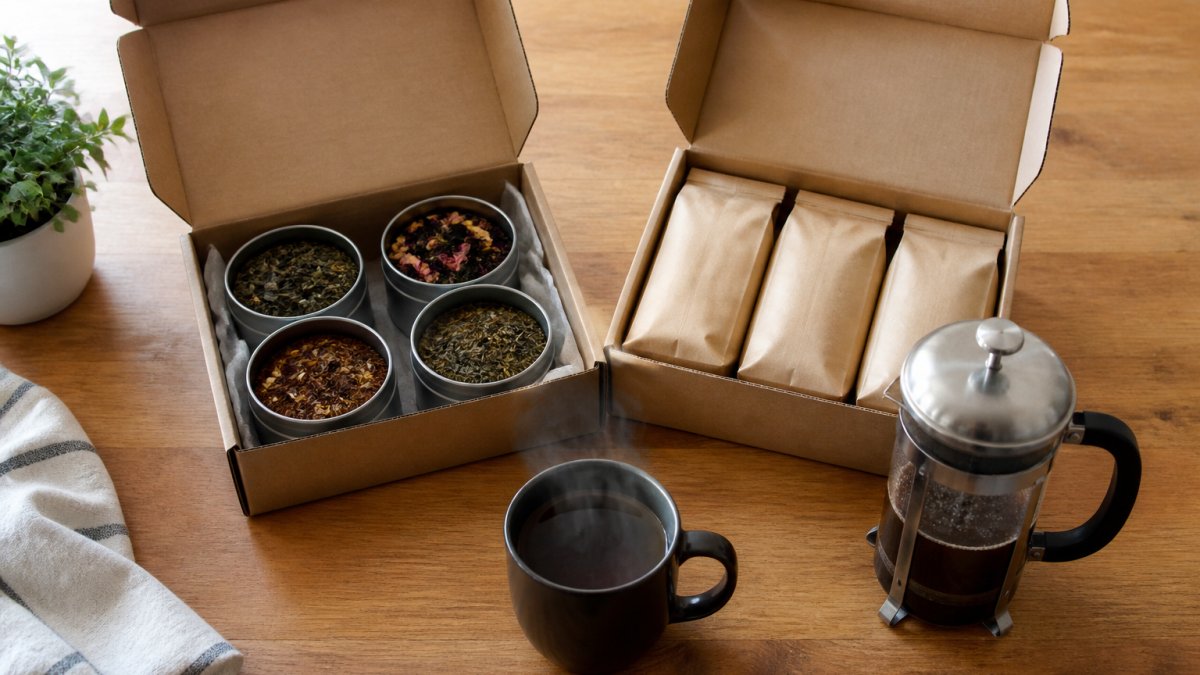
Atlas Tea Club: Curated Loose-Leaf Discovery
Atlas Tea Club is a tea-first subscription: a rotating selection of loose-leaf teas, often organized around a theme or region, with tasting notes and brewing guidance in each shipment.
The trade-off: loose-leaf requires an infuser or teapot and attention to water temperature. If you want a bag you can drop in a mug at your desk, this format adds friction.
Berks Beans: Coffee-First with a Tea Option
Berks Beans leads with coffee. Its identity is roasted beans, and tea is a secondary line, so the tea selection tends to be smaller and the educational content skews toward coffee brewing.
If you drink both, a coffee-first roaster can be convenient; if tea is your whole ritual, the tea side will likely feel thin.
Best Tea Subscription Services Compared: Variety, Sourcing, and Freshness
The best tea subscription service depends on whether you want breadth of tea styles or a reliable everyday cup. Breadth favors a tea-first club; consistency favors a roaster that ships fresh and keeps its lineup tight.
Tea Variety Subscription: How Many Origins and Styles You Get
A tea variety subscription should rotate origins and styles often enough that you learn something. Look for a stated rotation cadence, named regions, and tasting notes on every item; "assorted teas" without specifics is a red flag.
Here is how the two stack up on the factors that decide most purchases:
| Factor | Atlas Tea Club | Berks Beans | Edge |
|---|---|---|---|
| Primary focus | Loose-leaf tea | Roasted coffee | Depends on drinker |
| Tea format | Loose-leaf | Limited tea line | Atlas |
| Coffee quality | Not the focus | Core strength | Berks Beans |
| Tasting notes | Detailed, tea-specific | Coffee-led | Atlas for tea |
| Brewing guidance | Tea methods | Coffee methods | Split |
| Best for | Tea explorers | Dual coffee-and-tea drinkers | , |
Tea Subscription Cost: Price per Serving and Total Delivered Cost
Sticker price per box is the least useful number on a subscription page. What decides whether a club is a good deal is cost per brewed cup, which requires three inputs: plan price, shipped weight, and your dose per brew. Most buyers compare only the first, which is why two services $5 apart per shipment can land 40-50% apart per cup.
The cost-per-serving formula
Use the same arithmetic for both services:
- Total shipped weight. Add the grams (or ounces) of every item in the box. A 4-ounce tea shipment is about 113 grams; a 12-ounce coffee bag is about 340 grams.
- Your dose. A typical loose-leaf steep uses 2-3 grams per 8-ounce cup; a typical drip or pour-over dose is 15-18 grams per 10-12-ounce mug. Use your own habit, not the marketing "cups per bag" claim.
- Servings per shipment = total weight ÷ dose.
- Cost per serving = plan price ÷ servings.
A worked example: a $25 shipment of 100 grams at 2.5 grams per cup yields 40 cups, or about $0.63 per cup. A $20 shipment of 60 grams yields 24 cups, or about $0.83 per cup. The cheaper box is the more expensive cup, common enough that you should run the math before judging either service on price.
What to verify on each service's plan page
Because plan tiers, shipping thresholds, and included weights change, build your comparison from the current checkout page on the day you buy. Pull these five data points for both services:
- Plan price per shipment at the frequency you would actually choose (monthly vs. every other month).
- Shipped weight of tea and/or coffee, in grams or ounces, per shipment.
- Shipping charge and whether it is waived above a spend threshold.
Multiply the per-shipment total (price + shipping + tax) by 12. That annual figure is what you are actually committing to, and the fairest way to compare a tea-first club against a coffee-first roaster whose tea line may be priced differently from its coffee plans.
The non-subscription benchmark
A fixed reference point helps. theITDGroup LLC sells its House Blend at $23.99 and its Latin American Blend at $23.99, roasted to order, with a Breakfast Blend and a Best Sellers Sample Pack at $24.99. These are one-time purchases with no recurring billing, a clean yardstick: if a subscription's cost per cup is meaningfully higher than a fresh bag you can reorder on your own schedule, it has to earn that premium through curation, education, or convenience.


Tea Subscription Cancellation Policy: Flexibility and Commitment
Cancellation terms are where subscription boxes earn or lose trust, and they are the most under-covered topic in tea and coffee subscription comparisons. Most reviews stop at "easy to cancel" without saying what easy means. Here is the practical framework, plus the terms to pull from each service before you enter a card number.
The five terms that actually matter
- Minimum commitment. Some clubs require a set number of shipments (commonly 3, 6, or 12) before you can cancel without penalty; others are month-to-month from day one. A minimum term often comes with a lower per-box price, but know the exit cost before you start.
- Cancellation notice window. The cutoff is usually tied to the next billing date, often 3-7 days ahead of renewal, or the next box ships and bills. Verify the exact window; "cancel anytime" frequently means "cancel anytime before the cutoff."
- Skip vs. pause vs. cancel. Skipping affects one shipment; pausing suspends billing for a set period; canceling ends the plan. A service offering skip and pause is materially more flexible than cancel-and-resubscribe, since resubscribing can forfeit a grandfathered rate or first-box discount.
- Frequency changes. Moving from monthly to every other month without canceling effectively halves your annual spend without losing the account. Ask whether changes take effect on the next cycle or the one after.
- Refunds and damaged shipments. Check the policy for boxes lost or damaged in transit and for dissatisfaction with a specific item. Policies vary widely, some replace, some credit, some do neither, and the answer is usually buried in the terms page, not the marketing page.
How to verify each service in under ten minutes
Because plan terms change, run your comparison against the live terms page and checkout flow for both services on the day you buy:
- Open the terms of service and the subscription/FAQ page and search for the words commitment, renewal, cancel, skip, and pause. If none of those words appear, email support and ask for the answers in writing.
- Start a checkout (without submitting) to see whether a minimum-term selection or a cancellation-policy acknowledgment appears before payment.
- Note the billing date and the cutoff date for changes, and put the cutoff in your calendar for the first renewal. Most surprise charges happen because the buyer missed the cutoff, not because the policy was hidden.
Why flexibility is worth a small premium
A flexible plan is worth a modest premium per box. If you travel, drink tea in waves, or want a two-month trial, skip and pause beat a lower price you cannot escape. The reverse holds too: if you will drink the shipment every month, a minimum-term plan with a lower per-box rate can be the better deal, provided you have read the exit terms.
Tasting Notes, Brewing Guidance, and Educational Extras
Tasting notes and brewing guidance are the difference between a box of tea and a course in tea.
Atlas Tea Club leans into this: region context, flavor profiles, and brewing instructions tuned to each tea. Berks Beans applies the same discipline to coffee, roast level, brew method guidance, and origin notes.
If you want to learn, pick the service whose education matches your drink.
Freshness and Flavor: Roast Dates, Origin Notes, and Shipping
Freshness means different things for tea and coffee. Coffee is best within weeks of roast; many teas hold well for months if stored away from light, heat and moisture.
That asymmetry should shape your choice. If freshness is the priority, a roaster that prints roast dates and ships quickly wins.
Shipping cadence matters too. Monthly delivery suits most households. Biweekly makes sense only if you drink several cups a day.
Which Tea Subscription Fits Your Routine? A Buyer's Decision Framework
Score each line for yourself, then pick the service that matches your highest priority.
- I want to explore many tea styles and regions: choose a tea-first club.
- I drink coffee daily and tea occasionally: choose a coffee-first roaster.
- I need bagged options for convenience: check whether loose-leaf only is a dealbreaker.
If you score high on tea exploration, Atlas Tea Club fits. If you score high on everyday coffee with tea as a bonus, Berks Beans fits.
You do not have to choose a subscription at all. theITDGroup LLC roasts to order and sells by the bag, so you can test a Breakfast Blend or the Best Sellers Sample Pack at $24.99 before committing to any recurring plan. The Latin American Blend at $23.99 covers the medium-dark, cocoa-forward end.
For background on how roast date and storage affect flavor, the Specialty Coffee Association's freshness guidance is a useful reference. Tea buyers can check USDA tea and beverage grading resources for general product standards.
Frequently Asked Questions
Is Atlas Tea Club good for tea drinkers who want variety?
Atlas Tea Club is built around a curated selection of loose-leaf teas from different regions, so each monthly delivery introduces new origin notes and flavor profiles. If you want a tea variety subscription that rotates styles instead of repeating the same blend, it fits that goal. Check the current product assortment and tasting notes before you commit, and compare the cost per serving against how many cups you actually brew each week.
How much does a tea subscription cost, and how do Atlas and Berks compare?
Tea subscription cost varies with box size, frequency, and shipping. Atlas Tea Club prices its plans by the number of teas and servings per delivery, while Berks Beans bundles tea with its coffee-first model. Add shipping to get the total delivered cost, then divide by the number of cups you get. For a coffee-only benchmark, theITDGroup LLC sells 12 oz bags such as House Blend and Breakfast Blend at $23.99, which helps you judge value for money.
Can you cancel an Atlas tea subscription easily?
Atlas Tea Club lets subscribers manage or cancel through their account dashboard, and the tea subscription cancellation policy is published on its site. Cancel before your next billing date to avoid another shipment. Berks Beans follows its own policy, so read both before you sign up. If flexibility matters most, favor the service with the shortest notice window and no minimum commitment, and keep a screenshot of the cancellation confirmation.
What is the difference between Atlas Tea Club and Berks Beans?
Atlas Tea Club is a tea-focused subscription with loose-leaf selections and tasting notes. Berks Beans is a coffee roaster that also offers tea, so its strength is bagged coffee and specialty coffee rather than tea depth. If tea is your priority, Atlas gives more leaf variety. If you want one box for both drinks, Berks covers both. Compare freshness, grind size options for coffee, and price per serving before choosing.
Which tea subscription is best for trying teas from different regions?
Look for a service that publishes origin notes and rotates single-origin lots. Atlas Tea Club structures deliveries around regional discovery, which suits drinkers who want to explore. Pair it with brewing tips for each style, and use a French press or gaiwan to keep comparisons fair. If you also drink coffee, add a sample pack such as theITDGroup LLC's Best Sellers Sample Pack at $24.99 to test six coffees alongside your tea.